
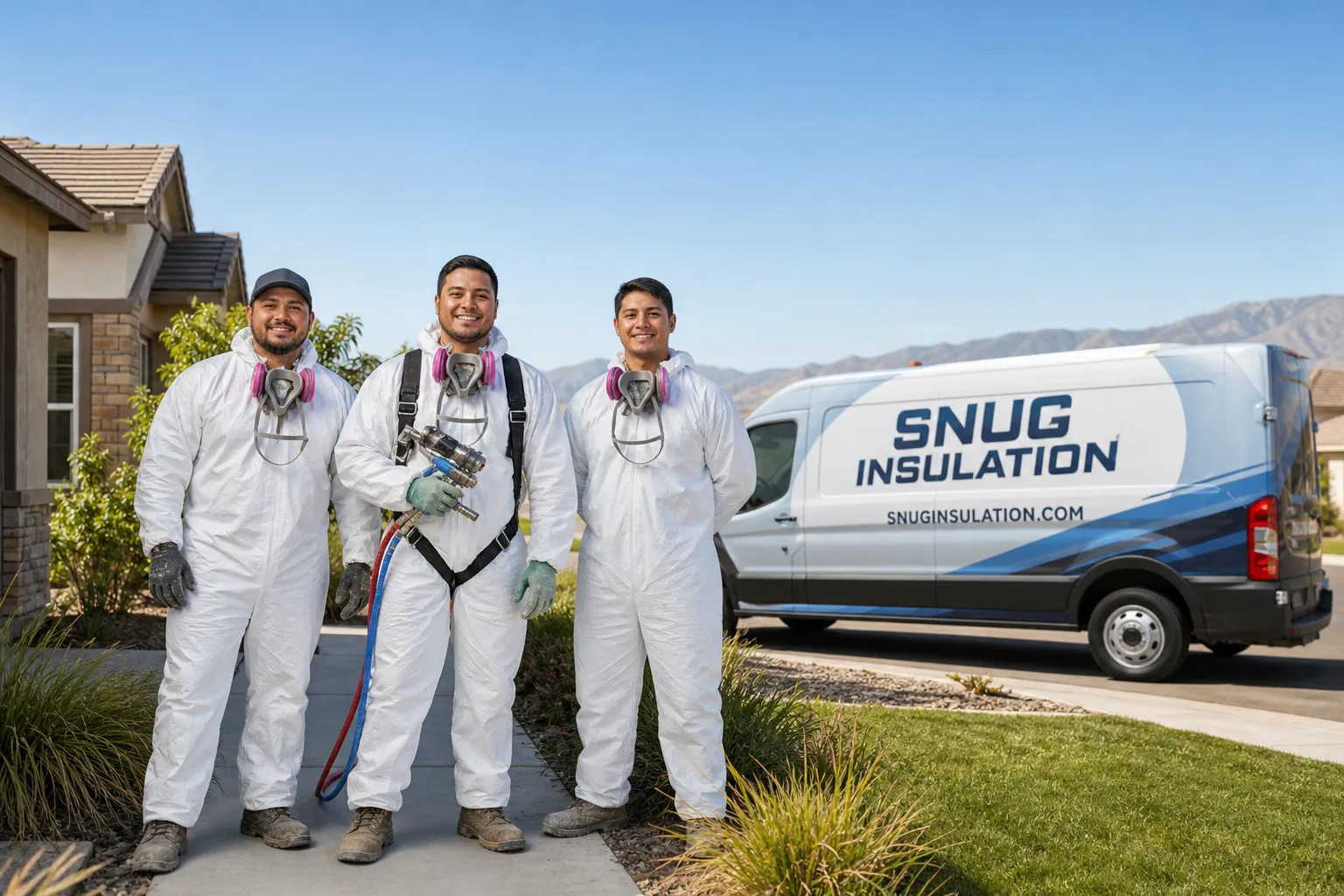
Fast, Reliable Attic Insulation Across Sierra Madre
Attic insulation in Sierra Madre is rarely about adding the thickest batt and calling it done. Most homes here date to the early 1900s, and the canyon-shaded lots mean attics collect decades of oak and deodar leaf litter that clogs vents, buries wiring, and smothers whatever insulation was originally installed. We work throughout Sierra Madre weekly, including the canyon-mouth streets near Sturtevant Drive and the shaded neighborhoods around Baldwin Avenue, and our crews understand the difference between a tract-home retrofit and a 1920s Craftsman with irregular framing. If your rooms overheat on summer afternoons or your energy bills climb every August, call (844) 241-0737 for a free attic assessment. We’ll tell you honestly whether you need new insulation, a top-up, a full replacement, or simply a proper vent cleaning before anything else.
Why Snug Insulation Is Sierra Madre’s Preferred Attic Insulation Company
Sierra Madre homeowners don’t want a roofer who does insulation on the side. They want someone who understands why a 1923 bungalow off Hermosa Avenue behaves differently from a 1960s rancher off Orange Grove. Our Attic Insulation crews specialize in exactly that. We’re insulation-only: no roofing jobs, no siding, no general contracting. Every crew member’s knowledge is focused on thermal performance, ventilation, and air sealing in older structures. That focus matters in Sierra Madre, where many attics have original framing dimensions that don’t match modern batts, and where adding insulation incorrectly can trap moisture or bury old knob-and-tube wiring.
We’ve worked on homes throughout 91024 and 91025, from the canyon shadows near Carter Avenue to the sunnier lots along Sierra Madre Boulevard. The work we do in this town has taught us what to look for: settled loose-fill, clogged soffit vents, and framing bays that were never designed for deep insulation. That local knowledge shows up in every estimate we write.
Radiant Barrier in Sierra Madre
Radiant Barrier in Sierra Madre addresses the real problem this town faces: hot roof decks pushing heat downward into living spaces, especially during Santa Ana wind events when outside temperatures spike and winds strip away any natural shade benefits. A radiant barrier is a reflective material installed along the underside of the roof deck. It doesn’t add R-value by itself; it reflects radiant heat away from the attic, keeping the whole space cooler before heat ever reaches your insulation layer. We recommend it for Sierra Madre homeowners with unshaded roof sections that bake in the afternoon sun, or for anyone whose second-story rooms run 10 degrees warmer than the rest of the house.
Sierra Madre radiant barrier installation typically runs $1.60 to $2.80 per square foot, depending on access, roof pitch, and whether existing insulation needs to be pulled back first. For a 1,200-square-foot attic, that’s roughly $1,900 to $3,400. It’s often paired with an attic cleaning service, since the reflective surface works best in a clean, ventilated attic.
When Infrared Heat Defeats Fiberglass
Fiberglass batts slow conductive heat, but they do little against radiant heat from a hot roof. In Sierra Madre, where canopy shade is uneven block to block, homes with the slightest southern or western exposure can have attic temperatures 30 degrees above homes shaded by deodars and oaks two streets over. A radiant barrier stops that heat at the source.
What We Install Under the Roof Deck
We work with reflective barrier products compatible with the framing conditions found in pre-1940 attics. Irregular rafter spacing is common in Sierra Madre bungalows, so we cut and fit sections around existing purlins, braces, and vent boxes rather than using a one-size roll. The result is a foil surface that stays clean and reflective for decades, not one that sags or tears under attic dust.
Attic Cleaning Services in Sierra Madre
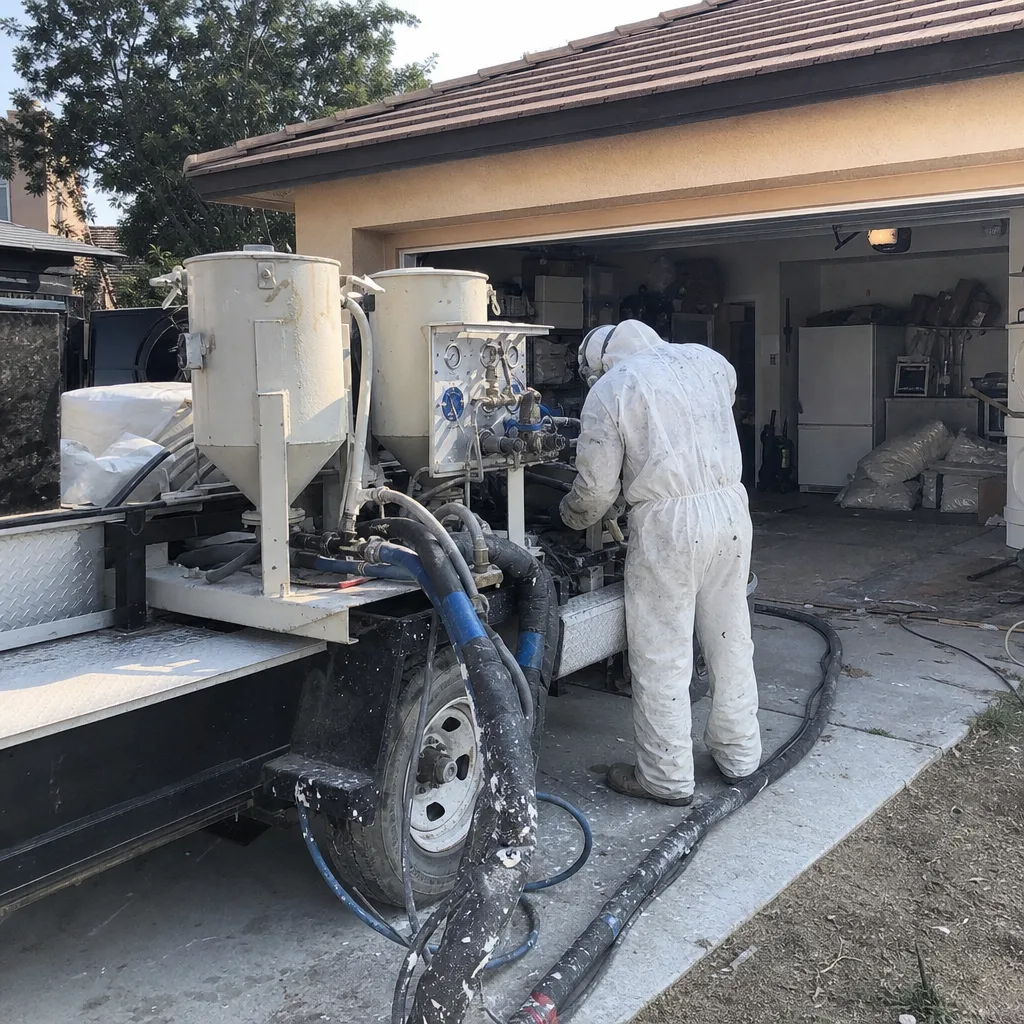
Attic Cleaning Services in Sierra Madre are not an optional add-on; they’re often the first step before any insulation work can start. This town’s dense oak and deodar canopy means leaf litter and roof debris work their way into attics through gable vents and soffit gaps season after season. We routinely vacuum out 40 to 60 gallons of dried leaves, dust, and old nesting material from a single canyon-shaded attic before we can even see the framing or wiring conditions.
A full attic cleaning in Sierra Madre, including debris removal, HEPA vacuuming, and inspection of vents and wiring, typically runs $800 to $1,800 depending on attic size, access, and the depth of accumulated debris. For attics with rodent activity or visible mold on sheathing, we add a sanitization step that brings the range to $1,200 to $2,400. It’s work most generalists won’t touch, and it’s the reason we carry commercial vacuums and negative-air setups on our Sierra Madre trucks.
Before the Batts, Clear the Canopy Debris
Adding new insulation on top of leaf-choked vents and buried wiring creates a fire hazard and a ventilation failure. The cleaning step isn’t about tidiness; it’s about making sure the airflow design of your attic actually functions before you seal it tighter. Many Sierra Madre attics haven’t been cleaned in 50 years, and it shows.
Addressing Knob-and-Tube and Old Wiring
We frequently find knob-and-tube wiring in Sierra Madre’s 1900-to-1930 housing stock, especially in attics that haven’t been updated. Our rule is simple: we never bury live knob-and-tube under new insulation. We flag it, recommend a licensed electrician, and pause the insulation step until the wiring is addressed. That protects your home and preserves the insurance eligibility many older Sierra Madre homes carry.
What happens when you call
- 1
A real person answersNo phone trees — you reach a local pro.
- 2
You get an upfront price rangeHonest numbers before anyone is dispatched.
- 3
A background-checked tech heads outLicensed & insured, dispatched right away.
- 4
You approve before work beginsNothing starts until you say go.
Trusted Brands We Service in Sierra Madre
We’re not tied to a single manufacturer’s product line. Snug Insulation stocks and installs materials from Owens Corning, Johns Manville, and Rockwool, among others, and we choose based on what the specific Sierra Madre attic needs. A 1925 Craftsman with irregular bays and no vapor barrier might call for Rockwool mineral wool’s moisture tolerance and fire rating. A standard flat-ceiling attic with good ventilation might take Johns Manville R-38 fiberglass batts at the best cost per square foot. That material-agnostic approach means our Sierra Madre customers get the right product for their attic, not whatever roll is cheapest at the supply house. Parts and materials for common Sierra Madre retrofit jobs are typically on our trucks or available same week.
Common Attic Insulation Problems We See in Sierra Madre Homes
- Settled legacy loose-fill under leaf litter. Decades of canyon oak and deodar debris accumulate on top of old loose-fill, compressing it to an inch or two of actual coverage. R-values that should be R-30 are reading R-5 in practice, and homeowners don’t realize it until an energy audit or a sweltering summer.
- Clogged soffit and gable vents from roof debris. Canyon winds push leaves into every vent opening. When vents clog, attic heat has nowhere to exit, moisture lingers in the tight shaded envelope, and insulation stops doing its job. This is the most common fix before we add any new material.
- Knob-and-tube wiring buried under old insulation or debris. A serious fire risk in Sierra Madre’s early-1900s homes. Old ceramic tubes and cloth-wrapped wiring were never designed to be buried, and when insulation or debris covers them, heat can’t dissipate. We label and flag these findings on every attic we open.
- Irregular framing and uninsulated wall cavities in pre-1940 bungalows. Original Craftsman framing often has bays at odd widths, notched rafters, and zero air sealing around ceiling penetrations. Air moves through outlets, fixtures, and framing gaps, dragging heat in during summer and out during cool canyon nights.
Pricing for Attic Insulation in Sierra Madre, CA
A full attic insulation replacement in Sierra Madre, including removal of old material and installation of new R-38 fiberglass batts, typically runs $3,800 to $6,500 for a 1,000-to-1,500-square-foot attic. If the attic only needs a top-up, expect $1,800 to $3,200. Blown-in attic insulation using GreenFiber cellulose runs $1.40 to $2.10 per square foot installed, while mineral wool batts from Rockwool add about 30 to 40 percent over standard fiberglass. Attic baffles and ventilation prep add $400 to $900 depending on how many bays need retrofitting and how badly existing vents are clogged. The figures we quote are specific to Sierra Madre: the aging housing stock, irregular framing, and debris-clearing steps add labor that extends timelines but prevents failures. Call (844) 241-0737 for a free, itemized estimate with no obligation.
We Also Serve Cities Near Sierra Madre
Our crews cover the surrounding foothill communities with the same specialized approach. We serve homeowners in Sierra Madre, Arcadia, East Pasadena, Mayflower Village, and Monrovia. If you’re in a nearby town with a similar era of housing stock, the same canyon-debris and legacy-wiring concerns apply, and we assess them the same way.
Serving Sierra Madre, CA — Our Local Coverage Area
We’re based in the Sierra Madre area and know this community well. Use the map below to see our service coverage — if you’re nearby, we can almost certainly help.
FAQs About Attic Insulation in Sierra Madre
No. In Sierra Madre’s pre-1940 bungalows, original loose-fill has usually settled, been crossed by old wiring and debris, and lost nearly all its thermal value. Adding batts on top doesn’t fix the settled base layer, can bury knob-and-tube wiring, and traps whatever leaf litter and animal activity is already up there. We remove the old material, inspect the framing and wiring, and then install the correct new insulation. Call (844) 241-0737 and we’ll look before recommending anything.
Two ways: leaf litter clogs vents and debris covers insulation, and dense canopy shading means some attic spaces run cooler than expected while others, on the unshaded edges, run much hotter. That variability is exactly why Sierra Madre homes need a block-by-block assessment rather than a generic “add R-38” prescription. A shaded canyon attic needs vent cleaning and moisture control; a sun-exposed one needs radiant control and deeper insulation.
The approach is always wiring first, then air sealing, then insulation. In a 1920s Craftsman in Sierra Madre, irregular framing and knob-and-tube wiring must be addressed before any insulation goes in. Once the wiring is cleared and the framing measured bay by bay, we typically recommend Rockwool mineral wool batts for their ability to fit irregular cavities without sagging and their fire rating. Spray foam is sometimes appropriate for the rim joist and open framing zones, but the right answer depends on what the attic actually looks like.
Possibly. If your attic has a reasonable insulation layer but upper rooms still overheat, the problem is radiant heat penetrating the roof deck. A radiant barrier mounted to the underside of the deck stops that heat before it reaches the insulation. In Sierra Madre, homes with any unshaded roof surface gain the most from this addition. We’ll tell you if your specific roof orientation makes it worth the investment.
Every 5 to 7 years, or sooner if you notice new dampness, rising summer bills, or an abrupt temperature difference between floors. The tree canopy in Sierra Madre drops debris seasonally, and a vent that’s clear today can be clogged after one big Santa Ana wind event. A periodic look, even if it’s just us checking vent flow and debris depth, prevents small failures from turning into full insulation replacements. Call (844) 241-0737 and we’ll schedule a visit.
Contact Snug Insulation in Sierra Madre
If your Sierra Madre home’s attic hasn’t been looked at in years, there’s a good chance leaf litter, settled insulation, or old wiring is working against your comfort and your energy bill. We’ll come out, inspect what’s up there, and give you a straight answer on what you need, what you can skip, and what it will cost. Call (844) 241-0737 for a free estimate. Written by Noel Castaneda, Owner at Snug Insulation, serving Sierra Madre’s older canyon homes and foothill neighborhoods with material-matched attic insulation, spray foam, and blown-in solutions.