
Insulation Company in San Joaquin Hills, CA
Blown in insulation is the workhorse fix for San Joaquin Hills homes built between the 1980s and 2000s, where open attic spaces over stucco and concrete tile let afternoon heat pour into living areas below. Homes on the ridgelines above Newport Beach superheat by mid-morning even when the coast sits under fog, and loose-fill coverage that looked adequate in a builder’s spec rarely holds up to that kind of thermal cycling. Snug Insulation brings the right material, blown in properly, to seal the attic plane and stop the slow bleed of conditioned air. Call (844) 241-0737 to talk through what your attic actually needs.
Why San Joaquin Hills Homes Are Different
San Joaquin Hills isn’t a typical coastal suburb. The master-planned communities along the ridge – Crystal Cove, Pacific Ridge – sit above the marine layer, which means attics here bake while Newport Beach below stays cool and gray. A tile roof absorbing direct sun can drive attic temperatures past 140 degrees by late morning, and that heat doesn’t just disappear at sundown. It radiates into ductwork, warms the framing, and forces air conditioners to work against a thermal battery that recharges every afternoon.
The housing stock compounds the problem. Most homes are 1980s to 2000s construction with open attic spaces, stucco exteriors, and concrete tile roofs. Builders of that era rarely installed radiant barriers or sealed duct systems. The result: insulation that was marginal on day one and has since settled, compressed, or absorbed moisture from marine-layer humidity. We see attics where the blown-in fiberglass has dropped from an original R-30 to something closer to R-19 in the traffic areas, and homeowners wonder why the upstairs bedrooms never hold a set temperature.
There’s another wrinkle specific to this terrain. The ocean breeze that keeps coastal lots comfortable pushes moisture into ridge-top attics through undersized vents, creating condensation on ducts and rafters. That condensation drips onto insulation, matting it down and cutting its thermal performance further. Technicians who work San Joaquin Hills regularly learn to check for moisture staining on rafters and look at vent sizing before recommending any insulation upgrade, because adding material to a wet attic just hides the problem.
Our Main San Joaquin Hills Services
Most San Joaquin Hills homeowners call us about one of two things: an attic that’s driving up summer cooling bills, or rooms that never seem to match the thermostat setting. Here’s how each plays out locally.
Attic Insulation in San Joaquin Hills
Attic insulation here means working against a specific failure pattern: heat loading from concrete tile roofs, marine-layer moisture, and settled or compressed batts that no longer meet their rated R-value. We assess what’s already up there, check for moisture damage and vent sizing, and then build the attic floor back to a level that actually holds against a San Joaquin Hills summer. The goal isn’t just adding inches – it’s restoring the thermal boundary between attic and living space. Attic Insulation in San Joaquin Hills covers the full scope of what we do up there.
Spray Foam Insulation in San Joaquin Hills
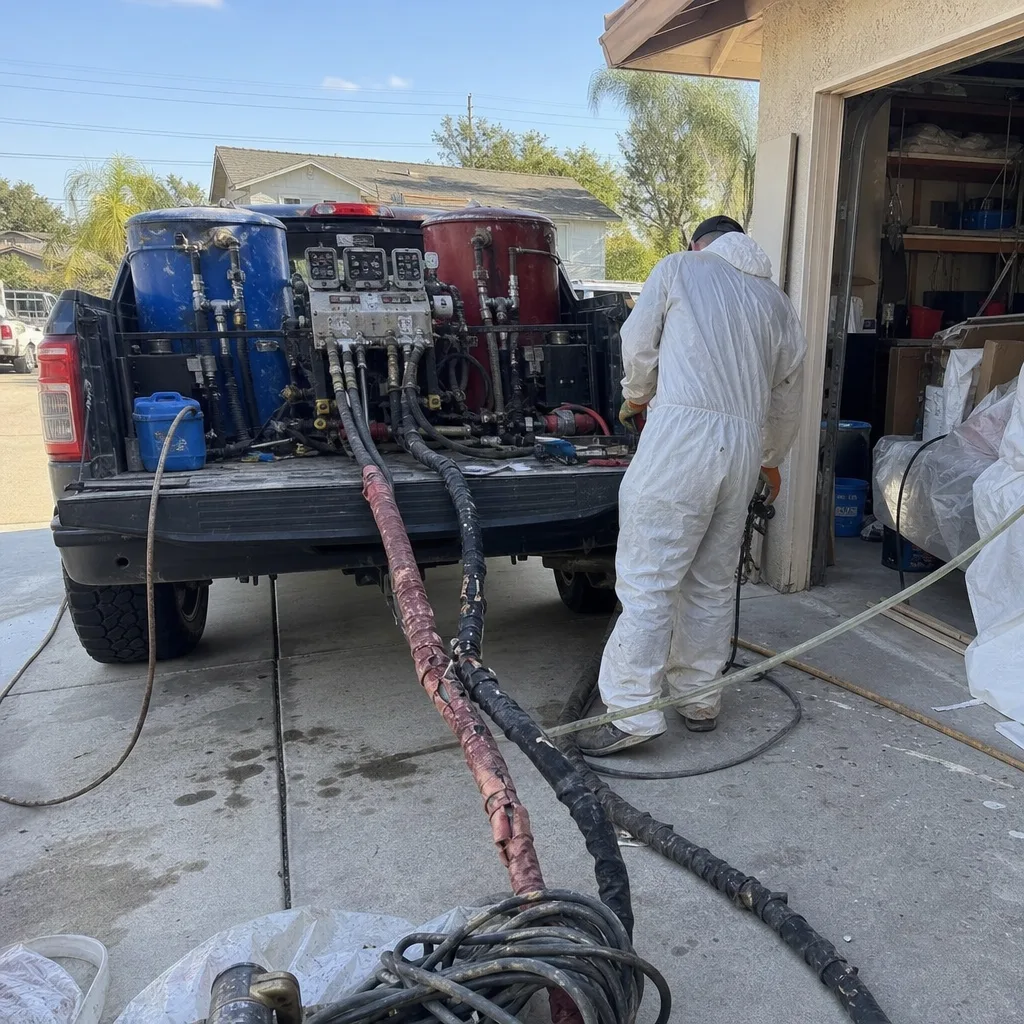
Spray foam earns its keep on ridge-top homes where open-cell foam can seal the roofline against both heat and that persistent marine-layer humidity, and closed-cell adds structural rigidity plus an air barrier in one pass. Homes with vaulted ceilings or bonus rooms over garages often have no attic floor to insulate, which makes spraying the roofline the only practical route to a sealed envelope. We work with Icynene and Demilec systems for these applications. Spray Foam Insulation in San Joaquin Hills explains the difference between open and closed cell and where each fits.
What happens when you call
- 1
A real person answersNo phone trees — you reach a local pro.
- 2
You get an upfront price rangeHonest numbers before anyone is dispatched.
- 3
A background-checked tech heads outLicensed & insured, dispatched right away.
- 4
You approve before work beginsNothing starts until you say go.
Blown In Insulation in San Joaquin Hills
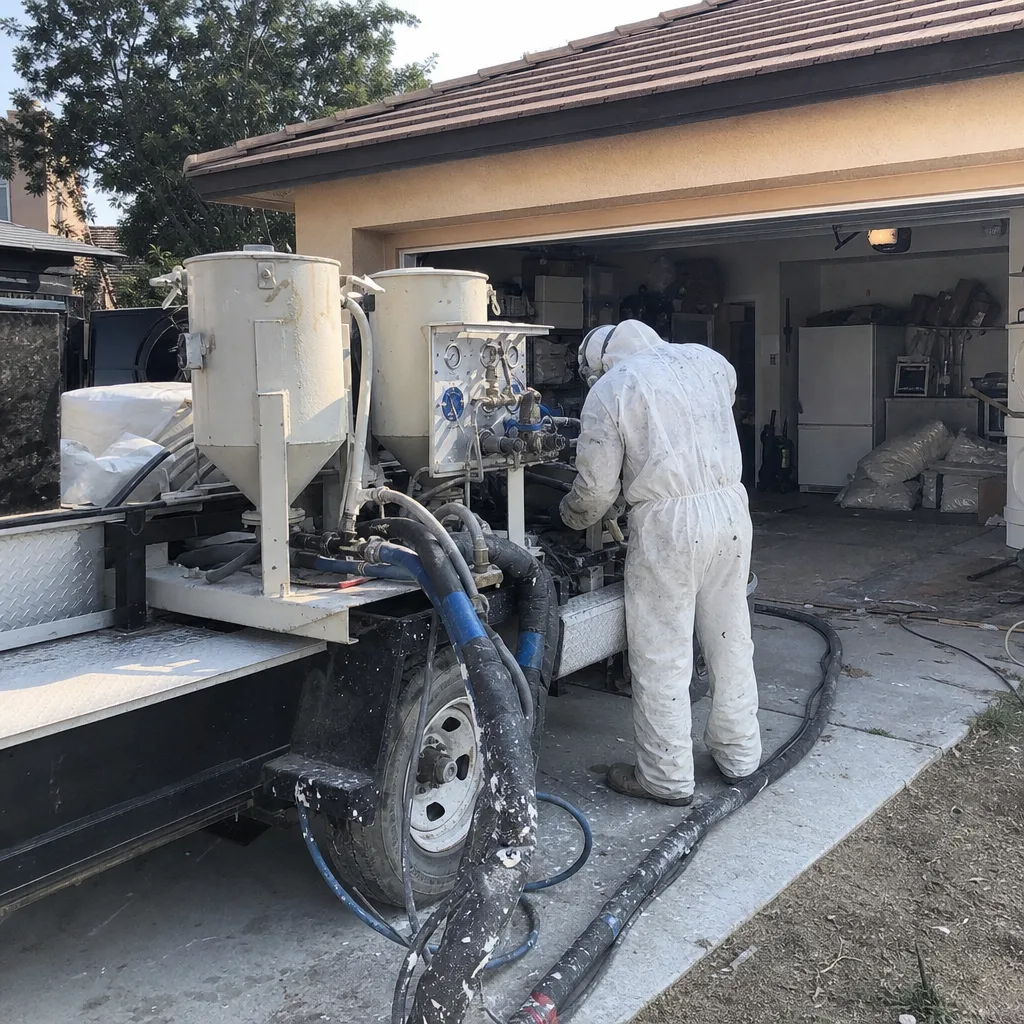
Blown in insulation is the most common fix we recommend for the 1980s-to-2000s homes that dominate San Joaquin Hills, because it’s the fastest way to restore full attic coverage over settled, compressed, or patchy existing material. Loose-fill material flows into the irregular cavities and around trusses that make these open attic spaces hard to insulate with batts, leaving no gaps for heat to find. The specific enemy here is the daily thermal cycle: tile roofs absorbing sun until mid-afternoon, then releasing that heat into the attic as the marine layer rolls back in at dusk. A properly blown attic slows both sides of that cycle. For homeowners weighing material choices, our Blown In Insulation hub walks through cellulose versus fiberglass, depth requirements, and what R-value actually means in a coastal ridge climate.
Cellulose Insulation
Signs you need it
You can see exposed ceiling joists in the attic, your upstairs rooms run 8 to 10 degrees warmer than downstairs on sunny days, or your existing insulation has settled into a thin, matted layer that no longer fills the joist bays.
What it costs in San Joaquin Hills
Blown-in cellulose in San Joaquin Hills typically runs $1.20 to $2.20 per square foot installed, depending on target depth and any prep work the attic needs first.
How we do it
We air-seal penetrations first, then blow GreenFiber cellulose to the target depth across the entire attic floor, keeping coverage consistent around eaves and over the top plates where heat leaks most.
Blown In Attic Insulation
Signs you need it
Your attic has original builder-grade fiberglass that’s compressed or displaced, your cooling bills climb every summer, or you’ve noticed condensation staining on rafters and duct insulation during marine-layer season.
What it costs in San Joaquin Hills
Full blown-in attic insulation for a typical San Joaquin Hills home ranges from $1,800 to $3,400, with larger ridge-top homes with complex rooflines landing at the upper end.
How we do it
We verify vent sizing and check for moisture before blowing, then lay down an even blanket at the specified depth, working around can lights, duct runs, and any existing baffles at the eaves.
Blown In Cellulose Insulation
Signs you need it
You want a denser, recycled-content material that fills wall and attic cavities better than fiberglass, or you’re retrofitting an older home where existing insulation leaves irregular gaps no batt can cover.
What it costs in San Joaquin Hills
Blown-in cellulose for an attic retrofit in San Joaquin Hills generally lands between $1.50 and $2.50 per square foot including air sealing and cleanup.
How we do it
We run a hose from the truck to the attic, and the material flows into every corner of the cavity under pressure, creating a continuous thermal blanket with no seams, gaps, or compressed edges.
Blown In Fiberglass Insulation
Signs you need it
You want a lighter loose-fill option that won’t settle as much as cellulose in humid conditions, or your attic already has fiberglass batts and you just need to top up depth to current code levels.
What it costs in San Joaquin Hills
Blown-in fiberglass in San Joaquin Hills runs $1.10 to $2.00 per square foot installed, with the final number tied to target R-value and attic accessibility.
How we do it
We blow loose-fill fiberglass to the specified depth, checking density as we go so the final R-value matches what the home actually needs rather than what’s easy to walk away from.
Loose Fill Insulation
Signs you need it
Your attic has uneven coverage with bare spots over bedrooms or bathrooms, or you need to insulate awkward areas like low-slope sections and around trusses where batts leave seams.
What it costs in San Joaquin Hills
Loose fill insulation in San Joaquin Hills typically costs $1.30 to $2.30 per square foot depending on material choice, depth, and whether the attic needs prep work like air sealing or baffle installation.
How we do it
We fill the entire attic floor to a consistent depth, paying special attention to the outer edges and over exterior walls where heat transfer is most aggressive on ridge-top homes.
What Blown In Insulation Costs in San Joaquin Hills
| Item | Typical range in San Joaquin Hills |
|---|---|
| Blown-in cellulose (installed per sq ft) | $1.20 – $2.20 |
| Blown-in fiberglass (installed per sq ft) | $1.10 – $2.00 |
| Full attic blown-in job (typical home) | $1,800 – $3,400 |
How long does blown in insulation last in San Joaquin Hills?
Cellulose typically holds its R-value for 20 to 30 years in a dry attic. The marine layer here shortens that if vents let moisture in, so we always check vent sizing and rafter staining before recommending new material.
Can you blow insulation over existing attic insulation in San Joaquin Hills?
Yes, as long as the existing material is dry and not moldy. We remove compressed or water-damaged sections first, then top up the clean areas to the target depth. Call (844) 241-0737 and we’ll inspect before quoting.
Brands We Service in San Joaquin Hills
We stock and install material from Rockwool, CertainTeed, Icynene, and Demilec, among others, so a San Joaquin Hills attic gets the product that matches its conditions rather than whatever one brand pushes. Most material is available locally within days, which keeps projects moving. See our brands for the full lineup and what each one does best.
Pricing for Insulation Company in San Joaquin Hills, CA
| Service | Typical range in San Joaquin Hills |
|---|---|
| Attic insulation – full job | $1,800 – $3,400 |
| Blown-in cellulose (per sq ft) | $1.20 – $2.20 |
| Blown-in fiberglass (per sq ft) | $1.10 – $2.00 |
| Blown-in attic insulation (full) | $1,800 – $3,400 |
| Loose fill insulation (per sq ft) | $1.30 – $2.30 |
| Spray foam – open cell (per sq ft) | $1.50 – $3.00 |
| Spray foam – closed cell (per sq ft) | $2.50 – $5.00 |
| Blown-in wall insulation (per sq ft) | $2.00 – $4.50 |
Prices in San Joaquin Hills push upward on ridge-top lots with steep roof pitches, difficult attic access, or moisture remediation before insulation can go in. Every quote we give is upfront and line-itemed, so the number we discuss before the job is the number on your invoice.
Neighborhoods We Serve in San Joaquin Hills
Snug Insulation has served San Joaquin Hills since 2016, and we’re on these streets most weeks. Homes in the planned communities along the ridge share a construction era and a set of insulation problems, which means we know what we’ll find before we climb into the attic.
- Crystal Cove
- Pacific Ridge
- San Joaquin Hills Estates
- Ridgeview communities along Newport Coast Drive
- Bonita Canyon
Most San Joaquin Hills appointments are available within a few days, and we quote every job after seeing the attic, not over the phone.
Service Area – Cities Near San Joaquin Hills
Snug Insulation works throughout the coastal ridge and canyon communities around San Joaquin Hills, including Aliso Viejo, CA, Newport Beach, CA, Laguna Beach, CA, and Irvine, CA. If you’re in one of these neighboring cities and dealing with the same heat-loading attic problems, we can help.
Serving San Joaquin Hills, CA — Our Local Coverage Area
We’re based in the San Joaquin Hills area and know this community well. Use the map below to see our service coverage — if you’re nearby, we can almost certainly help.
FAQs About Insulation Company in San Joaquin Hills
We coordinate with your HOA on any exterior-facing work that needs approval and can flag permit requirements before the project starts. Most attic and interior insulation jobs don’t need permits, but we’ll tell you if yours does after the inspection.
Most appointments are scheduled within a few business days, and we can often accommodate earlier visits when an attic problem is urgent, like active condensation or a failed duct connection. Call (844) 241-0737 and we’ll find a slot that works.
Yes, every San Joaquin Hills quote starts with an attic inspection. We check existing insulation depth and condition, moisture staining, vent sizing, and duct runs before recommending anything, because quoting blind leads to wrong material and wrong depth.
What happens when you call
- 1A real person answersNo phone trees — talk to a local insulation pro.
- 2You get an upfront price rangeHonest numbers before anyone is dispatched. No surprises.
- 3A background-checked tech heads outLicensed & insured, typically same-day.
- 4You approve before work beginsNothing starts until you say go.
What San Joaquin Hills Customers Say
"He did a blower door test before and after and gave me the numbers. I like being able to see the difference rather than being told about it."
— Ebony Dawson"Handled the utility rebate paperwork, which knocked a real amount off the final cost."
— Adriana Vargas"Installed baffles at the soffits so the new insulation didn't block the ventilation, which the previous contractor apparently never considered."
— Gilbert Hernandez