
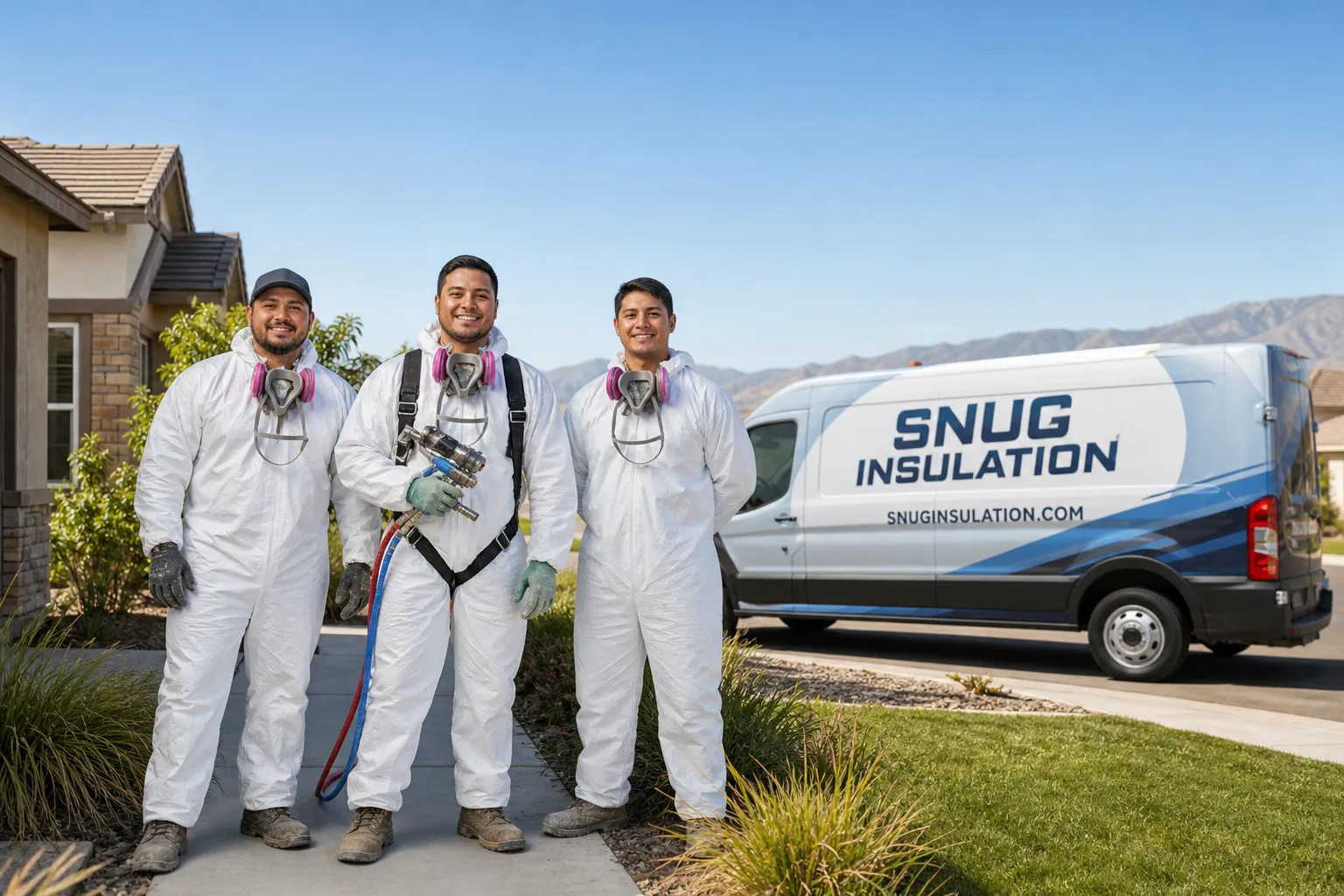
Fast, Reliable Attic Insulation Across West Puente Valley
Attic insulation in West Puente Valley usually means one thing: bringing a 1950s or 1960s tract home up to a standard its original builder never considered. Most of these single-story stucco houses off Valley Boulevard left the developer with R-7 foil-faced batts, if they got anything at all. Six decades later, that material is compressed, dirty, and doing almost nothing. We respond to 91746 calls fast because we know these attics well: low-slope composition roofs, original cavities, and heat that turns an under-insulated ceiling into a radiant panel by 2 p.m. If your upstairs rooms or hallway feel 10 degrees hotter than the rest of the house in summer, call (844) 241-0737. We’ll diagnose what’s actually up there before recommending anything.
Why Snug Insulation Is West Puente Valley’s Preferred Attic Insulation Company
Our crews work in West Puente Valley regularly, and we’ve learned the housing stock block by block. The tract homes east of Valley Boulevard and west of the Puente Hills were built fast and insulated cheaply. Homeowners here tell us the same story: the AC runs constantly from June through September, the ceiling feels warm to the touch in the late afternoon, and every quote they’ve gotten from generalist contractors treats insulation as an add-on to some other job. We don’t. Insulation is the only thing we do, and we approach each West Puente Valley attic as a retrofit, not a patch job.
Noel Castaneda started Snug Insulation to fix exactly this problem: homeowners being sold whatever material the contractor had left over, not what the house actually needed. In West Puente Valley, that almost always means removing failing original insulation before blowing in something better. We carry Owens Corning, Johns Manville, Knauf, and GreenFiber, so the recommendation follows the attic, not our inventory. Our technicians arrive in unincorporated 91746 knowing they may find vermiculite, rodent-damaged batts, or nothing but a 3-inch dust layer over drywall. That’s the job here.
Attic Mold Removal in West Puente Valley
Attic Mold Removal in West Puente Valley is a recurring need in these low-slope homes because the same construction that traps heat also traps moisture. When a 1960s tract house has inadequate ridge or eave ventilation, warm air rises into the attic, hits a cooler roof deck at night, and condenses. Damp wood plus decades of dust equals mold, especially on the north-facing sheathing and around bathroom exhaust vents that were never routed through the roof. We handle removal and the correction that keeps it from coming back.
Mold Removal Scope
The process starts with confirming the moisture source. Removing mold without fixing ventilation means doing it again in two years. We treat affected sheathing, replace saturated insulation, and prep the attic for proper venting before new insulation goes in.
Typical West Puente Valley Cost
Attic mold removal in West Puente Valley typically runs $1,200 to $4,000 depending on square footage and how far the mold has spread across the sheathing. Smaller attics with localized growth start lower; full-deck treatment with insulation replacement lands higher. Call (844) 241-0737 for an exact number after we see the attic.
Attic Insulation Removal in West Puente Valley
Attic Insulation Removal in West Puente Valley is the step most homeowners didn’t know they needed. Before any blow-in upgrade in these 1950s-60s tracts, we need to know what’s already up there. Original foil-faced batts compressed to an inch thick, vermiculite from the pre-1980s era, or blown material from some 1990s renovation all get removed differently. We don’t blow new insulation over failing old material and call it done.
What Removal Involves in These Homes
On a Valley Boulevard-adjacent block in 91746, our crew opened an attic filled with original R-7 foil-faced batts that had been compressed to less than an inch under decades of rodent runs and rerouted ductwork. After testing for vermiculite and finding none, we removed the failing batts and blew in GreenFiber to R-38, immediately dropping the afternoon ceiling temperature by 12°F and cutting the homeowner’s AC runtime by nearly a third. That’s the typical sequence here: test, remove, air-seal, reinsulate.
Removal Cost Ranges
Attic insulation removal in West Puente Valley generally runs $1.50 to $3.00 per square foot, so a typical 1,000 to 1,200 square foot attic lands between $1,500 and $3,600. Vermiculite testing and abatement, when required, adds cost above that range. We give you a firm number before any work starts.
Trusted Brands We Service in West Puente Valley
We install and service more than we sell, which changes how we talk about brands. In West Puente Valley attics, GreenFiber cellulose makes sense for retrofit blow-in work because it fills the irregular cavities in these older truss systems better than batts. Owens Corning and Johns Manville batts work well for accessible attics with standard joist spacing and good access. Knauf rounds out the lineup when price matters but the homeowner still wants a named product with published performance data. We stock materials suited to 1950s-70s construction, not just whatever a distributor had on the truck. For West Puente Valley customers, that means shorter turnaround on removal and reinstallation jobs.
Common Attic Insulation Problems We See in West Puente Valley Homes
– Compressed foil-faced batts from the 1960s. Original R-7 material flattens under stored boxes and pest traffic until it’s conducting heat instead of resisting it. These attics rarely show visible problems from below, but the ceiling runs 10-15°F hotter than the wall thermostat reading in summer.
– Low-slope composition roofs baking the attic. The shallow roof pitch common in West Puente Valley tract housing leaves less air space between the roof deck and the ceiling, so radiant heat transfers faster. By mid-afternoon even a newer AC unit struggles against the thermal load coming through the ceiling.
– Vermiculite-era insulation in scattered homes. Some attics off Valley Boulevard still carry pre-1980s vermiculite. It has to be tested before anyone disturbs it. We handle testing and coordinate removal if it’s contaminated, which few generalists in the area do.
– Disconnected or crushed ductwork over the attic floor. Decades of pest activity and storage have shifted ducts in many of these homes. Insulation alone won’t fix comfort if the ducts leak, so our assessment includes checking duct condition before quoting the insulation scope.
Pricing for Attic Insulation in West Puente Valley, CA
Attic Insulation Services We Provide in West Puente Valley
Our Attic Insulation team handles the full retrofit sequence here: blown-in attic insulation, batt installation, top-ups over salvageable material, full removal and replacement, and baffle or ventilation prep before any reinsulation. Most West Puente Valley jobs combine at least two of these. A typical call starts with a top-up request and ends with removal, air-sealing, and full reinsulation once we show the homeowner what’s actually above the ceiling. We’re material-agnostic on purpose: the attic tells us what it needs, and we match the product from the brands we carry rather than forcing one system.
What happens when you call
- 1
A real person answersNo phone trees — you reach a local pro.
- 2
You get an upfront price rangeHonest numbers before anyone is dispatched.
- 3
A background-checked tech heads outLicensed & insured, dispatched right away.
- 4
You approve before work beginsNothing starts until you say go.
West Puente Valley’s Unincorporated Status Changes the Job
Here’s what makes Attic Insulation in West Puente Valley different from the same job in El Monte or La Puente: 91746 is unincorporated, so building permits for attic work go through LA County’s building department, not a city planning office. That changes inspection timelines and code interpretation for every 1950s-60s tract home here. In practice, a homeowner adding insulation as part of a larger renovation may face different sequencing than a neighbor across the city line. Our crews know what LA County reviewers look for on insulation and ventilation plans in these older homes, and we handle the permit coordination so you’re not stuck on hold with a county office. This one detail reshapes how the entire project moves, and it’s specific to West Puente Valley.
Cold in winter? Not your problem. The inland San Gabriel Valley heat is. Summer highs in the 90s and 100s mean cooling drives your energy bill and comfort for eight months of the year. An under-insulated attic in West Puente Valley doesn’t just make the house warm; it makes the AC run constantly, which shortens equipment life and spikes summer bills. The original builders insulated for a heater that ran a few months in winter, not the central AC that runs daily now. That mismatch is why insulation upgrades in this particular pocket of the San Gabriel Valley return money faster than in coastal or cooler climates.
Attic Baffles & Ventilation Prep for West Puente Valley Homes
In these low-slope roofs, baffles aren’t optional. Original 1960s construction often skipped eave venting entirely, or the vents are now blocked by blown-in material from some earlier retrofit. Without baffles, air can’t move from the eaves to the ridge or gable vents, and the attic becomes a heat trap that cooks the new insulation. We install baffles at each rafter bay before blowing in new material, ensuring the ventilation path stays open. This step matters more in West Puente Valley than in many neighboring cities because the roof pitches are shallower and the attics have less natural air volume. Skipping baffles on a hot low-slope roof turns a $2,000 insulation job into a future mold problem.
We Also Serve Cities Near West Puente Valley
Our crews cover the surrounding communities, including Avocado Heights, La Puente, Valinda, and El Monte. The housing stock changes block by block across these city lines, and so does the permitting path. If you’re just outside 91746, we can still help, and we’ll know which building department governs your address before we quote the job.
Serving West Puente Valley, CA — Our Local Coverage Area
We’re based in the West Puente Valley area and know this community well. Use the map below to see our service coverage — if you’re nearby, we can almost certainly help.
FAQs About Attic Insulation in West Puente Valley
Do I need a permit to upgrade attic insulation in West Puente Valley?
Yes, most attic insulation upgrades in West Puente Valley require a permit through LA County because 91746 is unincorporated and falls under county building jurisdiction, not a city building department. Insulation-only jobs sometimes qualify for a simpler over-the-counter permit, but anything combined with ventilation changes or structural work needs plan review. We handle permit applications and inspection scheduling for every job we do here.
What is the typical starting R-value in these 1950s – 60s tract homes?
Most original West Puente Valley tract homes started with R-7 to R-11 in the attic, and many have settled or compressed below that over 60 years. Current code minimum for new attic insulation in this climate zone is R-38, which is roughly four to five times what these houses were built with. We typically bring homes up to R-38 or R-49 depending on the attic configuration and the homeowner’s budget.
How do you handle the original foil-faced batts found in many attics off Valley Boulevard?
We remove them. The original foil-faced batts in these attics are typically compressed, rodent-damaged, and performing at a fraction of their original R-7 rating. We don’t blow new insulation over them because the old material blocks proper air sealing and the compressed layer creates a thermal bridge. Full removal adds cost, but it’s the only way to get the real performance you’re paying for. Call (844) 241-0737 and we’ll explain the sequence for your specific attic.
Why does attic insulation matter more for cooling than heating in West Puente Valley?
Because this part of the San Gabriel Valley gets 90-100°F summer days for months, and the sun pounds these low-slope composition roofs all afternoon. Heat moves from the roof deck down through whatever insulation exists into the ceiling. In winter, the temperature difference between inside and outside is maybe 25 degrees; in summer it’s 40 or more. That larger summer temperature gradient makes insulation far more important for cooling performance than heating here.
Can you remove old insulation and mold in one visit?
Yes, we can remove old insulation and mold in one visit in most West Puente Valley attics. Mold treatment and insulation removal use different equipment but our crews are set up for both, and doing them together saves the homeowner a second mobilization and a second scheduling wait. The sequence matters: mold gets treated first, then insulation comes out, then we prep ventilation and reinsulate. Call (844) 241-0737 for an exact timeline based on your attic size.
Talk to a West Puente Valley Insulation Specialist
If you live in 91746 and your ceiling feels warm, your AC won’t shut off, or you suspect the attic hasn’t been touched since the Eisenhower administration, call (844) 241-0737. We’ll schedule a free attic assessment, show you what’s actually up there, and give you a quote that matches the right material to your house. No pressure, no generic pitch. Just a clear plan for an attic that finally does its job.
Written by Noel Castaneda, Owner at Snug Insulation, serving West Puente Valley and the surrounding San Gabriel Valley communities.