
Fast, Reliable Attic Insulation Across Topanga
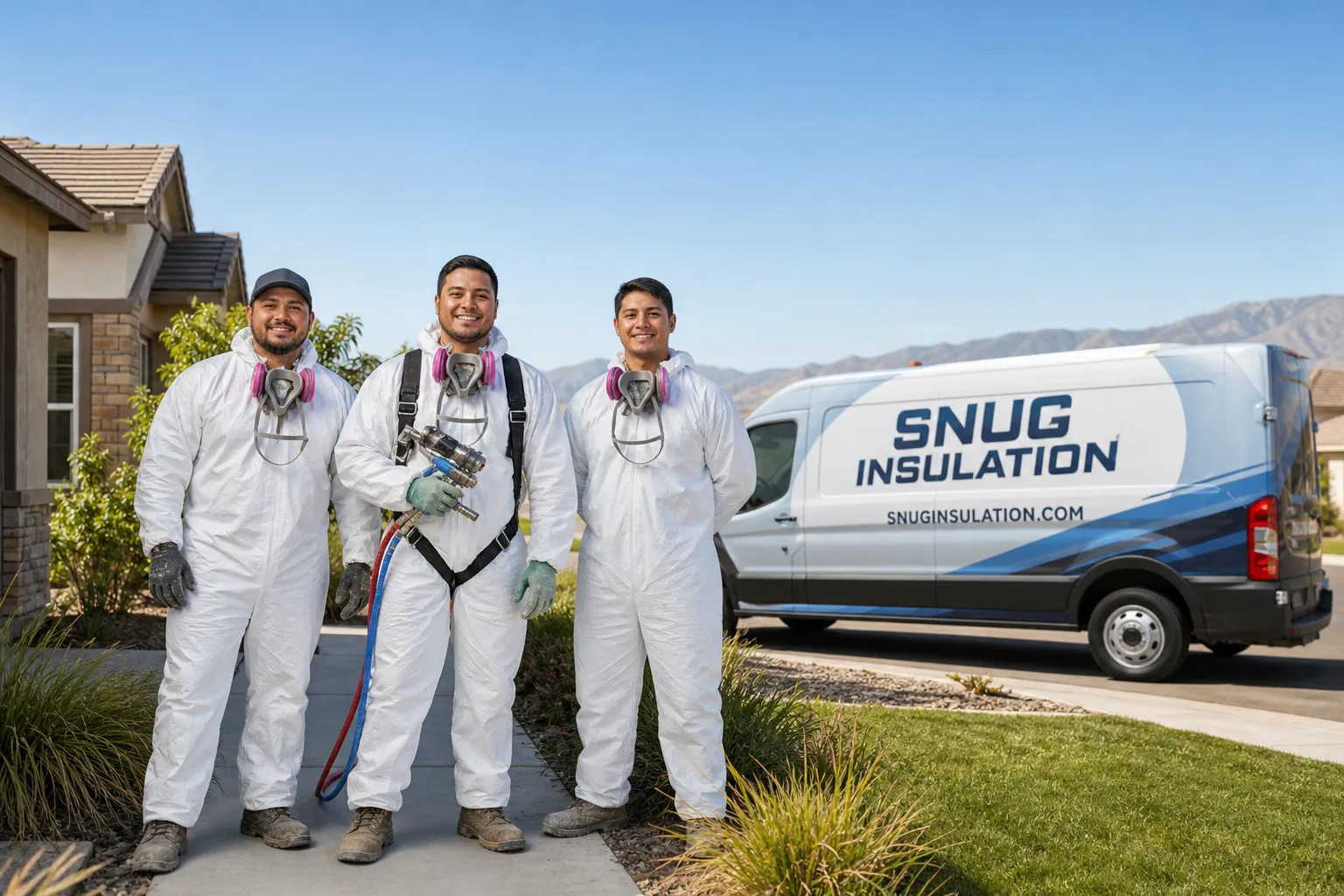
Attic insulation in Topanga rarely looks like what a standard insulation contractor expects. Most homes up here were built by hand between the 1920s and 1970s, often without permits, and many have no conventional attic floor at all. What they do have: exposed post-and-beam rafters, cathedral ceilings, open-beam A-frames and geodesic domes, and a fire-insurance letter that now drives the conversation more than the energy bill. We know this because we have worked on these structures. We are Snug Insulation, led by Noel Castaneda, and we approach every Topanga job as wildfire hardening first, thermal comfort second. For a free assessment of your roof assembly and rafter bays, call (844) 241-0737.
Key Takeaways
- Most Topanga homes have no conventional attic, so insulation goes in rafter bays or as rigid exterior sheathing, not blown-in fill.
- Insulation work in Topanga is driven by Cal Fire WUI inspection requirements and fire insurance letters as much as comfort.
- Material choice matters: non-combustible mineral wool and fire-rated assemblies beat fiberglass or cellulose in ember-prone canyon zones.
- We install attic insulation, spray foam, and blown-in, and we match the method to the actual as-built condition of your home.
Why Snug Insulation Is Topanga’s Preferred Attic Insulation Company
The Canyon demands a different kind of insulation contractor. Topanga is not a tract-home neighborhood. You drive up Topanga Canyon Boulevard past Fernwood and into roads like Saddle Peak and Old Topanga, and every house is its own one-off construction. That is exactly why homeowners here call us. Our Attic Insulation team works from an eight-brand material roster; Owens Corning and Johns Manville fiberglass, Knauf batts, Rockwool mineral wool, GreenFiber cellulose, and Icynene and Demilec spray foam. We do not have a favorite product we push on every job. We match the material to the fire exposure, the moisture swing, and the framing you actually have.
Noel Castaneda has built Snug Insulation around a single trade. Insulation is all we do. That focus means our technicians understand rafter-bay depth, ember-resistance ratings, vapor drive from morning marine fog, and the radiant load on a west-facing Topanga roof, because that is the work we see every week. Homeowners from Topanga who have had us out often mention the same thing: we explained why a particular material would fail in their house before we ever recommended an alternative.
We respond to Topanga calls quickly. We can usually be on site within one to two business days for an assessment, and faster when a Cal Fire inspection deadline is looming. You will talk to a person who knows the difference between a 1/4-inch mesh vent screen that embers pass through and the 1/8-inch or smaller screening that actually stops them.
Attic Ventilation in Topanga
Attic Ventilation in Topanga is almost never a standard ridge-and-soffit setup, because most homes here do not have a ventilated attic cavity to begin with. On a 1960s A-frame or an owner-built cabin with open-beam ceilings, the roof assembly is the ceiling assembly. Ventilation becomes a question of moving air through rafter bays, managing condensation on the underside of roof sheathing when coastal fog pushes up the canyon in the morning, and keeping soffit and eave openings screened to WUI standards without choking airflow. When we design ventilation for a Topanga roof, we are thinking about two things at once: preventing moisture from rotting exposed beams, and preventing embers from entering through an oversized mesh gap.
Ember-Resistant Vent Screening
Cal Fire’s WUI checklist now treats vent openings as a primary ignition path. Homes on Saddle Peak and upper Topanga that still have 1/4-inch mesh or unscreened gable vents get flagged, and insurance carriers act on that flag. We replace those screens with ember-rated mesh while preserving the net free vent area the roof assembly needs to breathe. The work typically runs $400 to $900 per vent location, depending on size and access.
Rafter-Bay Airflow Channels
Where a Topanga homeowner does have angled rafter cavities, we install baffles that keep an air channel open from eave to ridge. Without that channel, insulation pressed tight against the roof deck traps moisture from the morning marine layer. A typical baffle-and-air-seal package on a Topanga cabin runs $800 to $1,800, depending on rafter count and roof pitch.
Radiant Barrier in Topanga
Radiant Barrier in Topanga makes a measurable difference on south- and west-facing roofs that take direct afternoon sun while canyon walls hold the heat in. On a 100°F-plus Santa Ana day, the underside of exposed roof decking can hit 130°F or more, and that heat radiates down into open-beam living spaces. A radiant barrier, meaning a low-emissivity foil facing installed on the underside of the roof deck or rafters, reflects that heat before it becomes your problem. In a house with no attic to buffer the load, that single change can drop upstairs room temperatures noticeably.
Foil-Faced Roof Decking for Open-Beam Ceilings
For Topanga homes with cathedral ceilings and no attic space, we apply a foil radiant barrier directly to the underside of the roof deck between rafters. It works with whatever insulation you have in the rafter bays and requires zero added thickness. Expect to pay $1.50 to $2.50 per square foot of roof area for the barrier material and labor, with most Topanga roof decks running 800 to 1,500 square feet.
Radiant Barrier Plus Insulation in Rafter Bays
Radiant barrier handles radiant heat; it does not handle conductive or convective heat. In practice, we almost always pair it with Rockwool mineral wool or closed-cell spray foam in the rafter bays below the foil. That combination addresses the full heat-transfer picture on a west-facing Topanga roof. A combined radiant-barrier-plus-rafter-insulation job on a typical Topanga A-frame runs $4,000 to $9,000, depending on depth and access.
Trusted Brands We Service in Topanga
Because Topanga’s housing stock demands material flexibility, we stock and install a broader brand lineup than most insulation contractors in the Santa Monica Mountains. That includes Owens Corning and Johns Manville fiberglass batts for standard rafter bays, Knauf for specific R-value targets, GreenFiber cellulose where blown-in actually makes sense, and Rockwool mineral wool for the fire-resistance that WUI inspections require. We also handle Reflectix repair in Topanga when radiant barriers need attention. For Topanga homeowners, the practical difference is this: we do not have to special-order the right product while a Cal Fire deadline passes. We keep the materials we recommend for canyon conditions on hand, and we have direct access to Icynene and Demilec closed-cell spray foam for homes that need the air-sealing performance that batts cannot deliver.
Common Attic Insulation Problems We See in Topanga Homes
- Blown-in fill installed where no attic floor exists. Owner-built homes with cathedral ceilings and open-beam framing have no attic cavity to hold loose fill, so material sags, falls, or compacts unevenly within months. We have pulled failed cellulose out of more than one Topanga rafter bay where a general contractor treated an exposed ceiling like a standard attic.
- Combustible foam board left exposed in rafter bays. In homes built or remodeled in the 1970s and 80s, we find polyiso or polystyrene board squeezed between rafters with no non-combustible barrier. Under WUI ember-exposure rules, that is a fire-spread path, and insurance inspectors flag it. Rockwool ComfortBoard or mineral wool batts solve the condition directly.
- 1/4-inch vent screen mesh that embers pass through. Topanga’s fire-hardening rules require much finer mesh at every soffit, eave, and gable opening. An insulation upgrade that leaves old screening in place does half the job. We address screening as part of the thermal assembly, not as an afterthought.
- Missing or failed baffles in rafter bays with morning fog exposure. When coastal moisture pushes up Topanga Canyon and hits a warm roof deck, condensation forms. Without proper baffles and air channels, that moisture soaks into insulation and framing. We see this most often on lower Topanga homes closer to the fog line.
Pricing for Attic Insulation in Topanga, CA
Topanga pricing does not follow the square-foot attic formulas used in Encino or Sherman Oaks. The homes are smaller on average, but the labor is harder: steep pitches, limited staging, no flat attic floor to work from, and rafter-bay work that takes more time per square foot than blown-in fill. A full rafter-bay insulation job on a typical Topanga cabin runs $3,500 to $8,000 for fiberglass or mineral wool batts. Adding a radiant barrier on a south- or west-facing roof adds $1,500 to $3,500. Closed-cell spray foam in rafter bays runs $2.50 to $4.50 per board foot. Ventilation screening and baffles run $800 to $1,800 for a smaller home. Call (844) 241-0737 and Noel or a team member will walk the roof with you and give you a written number; estimates are free, and we never charge for the assessment.
We Also Serve Cities Near Topanga
Our crews regularly work the canyon communities and surrounding cities. Along with Attic Insulation in Topanga, we serve Encino, Santa Monica, Northridge, and Sherman Oaks. Same team, same eight-brand material access, same focus on matching the insulation to the actual house rather than a generic spec.
Serving Topanga, CA — Our Local Coverage Area
We’re based in the Topanga area and know this community well. Use the map below to see our service coverage — if you’re nearby, we can almost certainly help.
FAQs About Attic Insulation in Topanga
Rockwool mineral wool batts or boards are the usual answer, because they are non-combustible, they handle the moisture swings of coastal fog and canyon heat, and they fit into rafter bays without an attic floor. Closed-cell spray foam also works where air sealing is a priority. Fill-type insulation like blown-in cellulose does not work in open rafter bays without a cavity to hold it. Call (844) 241-0737 and we will tell you which one fits your specific roof assembly.
Insulation upgrades directly address several Cal Fire WUI checklist items: exposed combustible foam in rafter bays, ember-passing vent screens, and gaps in the building envelope that let embers enter. Replacing combustible materials with non-combustible mineral wool and installing ember-rated screens can move a home from a failed inspection to a passed one, which is often what an insurance carrier requires to keep or reinstate coverage.
Yes. On a south- or west-facing Topanga roof, the underside of the roof deck can exceed 130°F on a hot day, and with no attic cavity to buffer it, that heat radiates straight into the living space. A foil radiant barrier reflects most of that radiant load before it reaches the insulation and the room below. Homeowners usually feel the difference on the first hot afternoon.
The standard approach is rafter-bay baffles that maintain an air channel from eave to ridge, paired with ember-rated screens at every opening. This keeps the roof deck dry during foggy mornings and moving air during heat waves. We size the net free vent area to the actual roof footprint, not a rule of thumb from a tract-home manual.
We choose materials that tolerate moisture without losing R-value and that resist radiant heat. Mineral wool and closed-cell spray foam both handle the damp marine layer better than fiberglass, which loses thermal performance when it gets wet. We also factor in the radiant load from canyon-trapped afternoon sun, which is why radiant barriers and west-facing roof treatments come up so often in Topanga. For a specific recommendation on your house, call (844) 241-0737.
Written by Noel Castaneda, Owner at Snug Insulation, serving Topanga and the surrounding canyon communities.