Fast, Reliable Attic Insulation Across Moreno Valley
Most Moreno Valley attics were built for a climate that doesn’t exist here anymore. The original R-19 to R-30 batts installed in 1980s and 1990s tract homes weren’t sized for week after week of 100°F-plus afternoons, and after twenty or thirty summers of baking at 130°F, they’ve compressed into thin, tired mats that barely slow heat transfer. We replace that problem every week across Moreno Valley, from Sunnymead Ranch to Towngate. If your upstairs rooms won’t hold temperature and your AC runs constantly, the attic is usually the culprit. Call (844) 241-0737 for a free estimate, and we’ll tell you honestly whether you need an air-seal, a top-up, or a full removal and replacement.
Our crews know Moreno Valley’s housing stock because we work in it daily. The two-story stucco tract homes off Lasselle Street, the newer subdivisions near March Air Force Base, the established neighborhoods around Woodcrest: each has its own quirks, but nearly all share one failure pattern. Builder-grade insulation that gave up years ago. We’re a specialist, not a general contractor. Attic Insulation is what we do, every job, every day.
Key Takeaways for Moreno Valley Homeowners:
- Most local attics hold compressed R-19 to R-30 batts that have lost significant R-value under Inland Empire heat.
- Santa Ana winds drive dust and fiberglass through unsealed top plates into living spaces; air-sealing first is standard practice here.
- Cooling load dominates in Moreno Valley’s semi-arid climate; attic work pays back faster than in coastal LA.
- We install all three primary methods: blown-in, batt, and spray foam, matched to your specific attic.
- Free estimates, honest material recommendations, no upselling to a product we happen to stock.
Why Snug Insulation Is Moreno Valley’s Preferred Attic Insulation Company
Homeowners in Moreno Valley call us because we treat the attic as a system, not a box to stuff with fiberglass. The crews serving this area know the tract stock from the 1980s through the 2000s: 2×4 and 2×6 framed walls, stucco exteriors, attached garages, and attic floors riddled with unsealed penetrations. That last part matters more than most people realize. A Moreno Valley attic that gets new insulation without air-sealing first will still pull dusty, fiber-laden air into the house every time the Santa Anas blow.
We carry more material options than any generalist working in the Riverside area. Owens Corning, Johns Manville, Knauf, Rockwool, CertainTeed, Icynene, Demilec, and GreenFiber are all in our portfolio. For a hot, dry Moreno Valley attic, that means we can prescribe mineral wool where fire resistance or moisture tolerance matters, GreenFiber blown-in where recycled content matters, and closed-cell spray foam where air-sealing and R-value per inch matter most. We don’t push one product. We match the material to the house.
Noel Castaneda leads our team with a simple rule: diagnose first, prescribe second. If your attic batts can be topped up, that’s what we’ll recommend. If they’re compressed and degraded, we’ll say so and recommend removal. Either way, you’ll get a straight answer, not a sales pitch.
Radiant Barrier in Moreno Valley
A radiant barrier in Moreno Valley is one of the highest-value attic upgrades you can make because it directly attacks the dominant problem here: solar heat gain through the roof deck. The sun beats on the roof, the roof radiates heat downward, and the insulation below acts like a sponge that eventually passes that heat into the living space. A radiant barrier stapled to the underside of the rafters reflects a large share of that radiant heat back upward, keeping the attic cavity and the insulation below it measurably cooler. In our experience with Moreno Valley attics, a radiant barrier combined with R-38 insulation typically drops second-floor temperatures enough that the AC cycles noticeably less on 100°F afternoons. Radiant barrier installation in Moreno Valley generally runs $1.50 to $2.50 per square foot of roof deck, depending on attic height, access, and whether we’re also air-sealing.
What It Involves
We clean the roof deck area, verify the existing insulation depth and condition, and staple a perforated radiant barrier foil across the rafters with proper ventilation gaps. It’s straightforward work, but attic conditions here complicate it: by noon in July, the space can hit 130°F. We schedule installs for early morning, finish before the heat peaks, and the barrier starts working the same day.
Who Benefits Most
Two-story Moreno Valley tract homes with second-floor bonus rooms over the garage tend to benefit most. Those rooms sit above unconditioned space and collect heat from every direction. A radiant barrier, paired with air-sealing and upgraded attic insulation, changes the thermal profile of those rooms dramatically. We’ve seen homeowners report their bonus rooms finally holding temperature on 105°F days instead of cycling the AC nonstop.
Attic Cleaning Services in Moreno Valley
Attic cleaning services in Moreno Valley aren’t a luxury; they’re a necessary first step before any insulation work in a tract home that’s been here for twenty or thirty years. Santa Ana wind events push dust, grit, and loose fiberglass fibers through every attic penetration, and those same winds leave a layer of grime across insulation, wiring, and framing. Rodent activity leaves droppings and nesting material. If you’re replacing insulation, the old stuff and the debris it’s absorbed have to come out first. Attic cleaning in Moreno Valley typically runs $800 to $2,500, depending on attic size, depth of contamination, and whether rodent waste needs professional removal.
When You Need It
If you’ve had roof leaks that soaked the insulation, if you can see droppings or nesting debris, or if a Santa Ana has coated your living space with fine dust every time the wind picks up, your attic is due for a clean. This is especially common in Moreno Valley homes with recessed ceiling lights; the can gaps are dust highways. Cleaning alone won’t fix the gaps, but it removes what’s already come through.
Clean Then Insulate
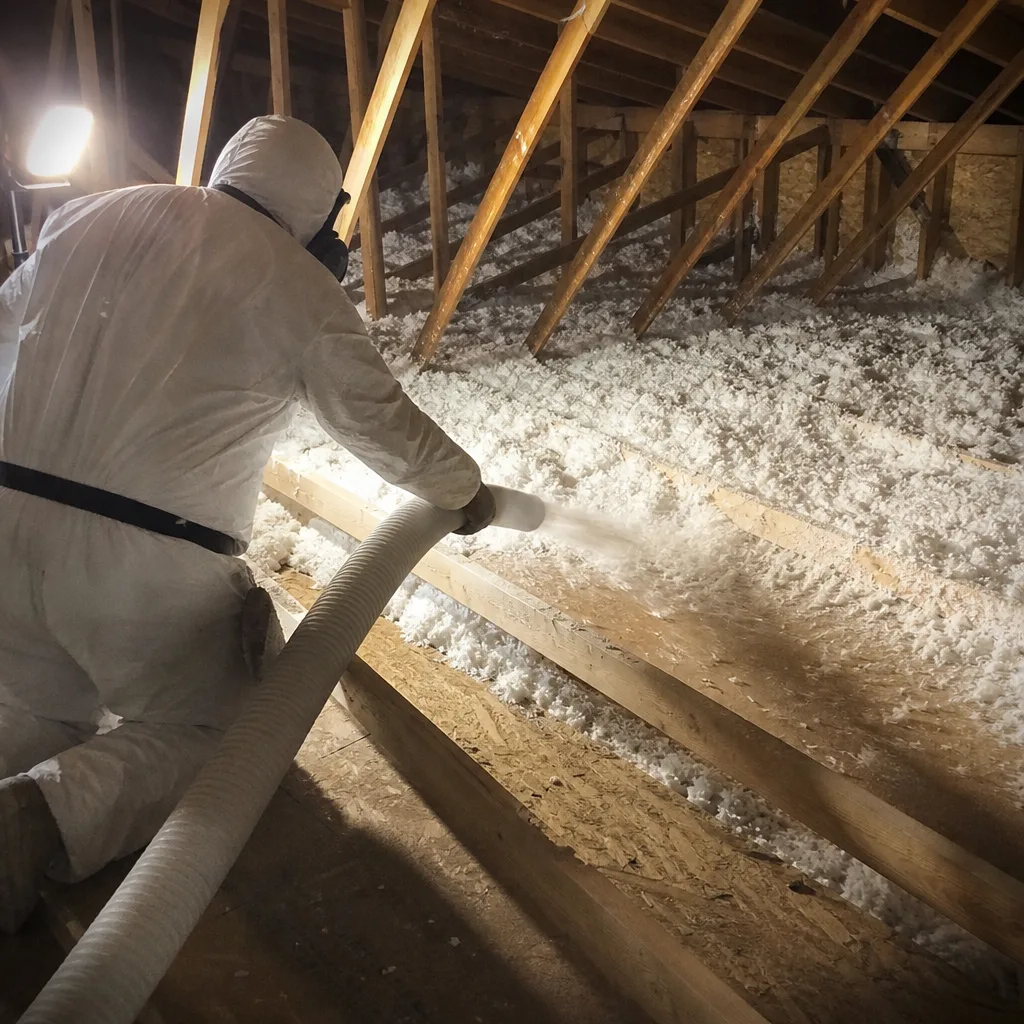
The smart sequence is clean, air-seal, then insulate. Insulating over contaminated or debris-laden material traps the problem and makes any future repair more difficult. We vacuum out the old material, sanitize the deck where needed, and leave a clean, dry surface for fresh insulation. Then the air-sealing starts before the new material goes down.
What happens when you call
- 1
A real person answersNo phone trees — you reach a local pro.
- 2
You get an upfront price rangeHonest numbers before anyone is dispatched.
- 3
A background-checked tech heads outLicensed & insured, dispatched right away.
- 4
You approve before work beginsNothing starts until you say go.
Trusted Brands We Service in Moreno Valley
Snug Insulation is a material-agnostic shop. We’re not tied to one manufacturer’s product line, which means the right material wins every time. In practice, that means GreenFiber cellulose blown-in for attics where recycled content and coverage quality matter, Owens Corning fiberglass for budget-sensitive top-ups and batts, and Johns Manville products where a mid-range fiberglass with proven performance fits the job. We stock enough of each to keep turnaround fast for Moreno Valley customers, and we have Knauf batts available when a specific density or facing is called for. If you’re not sure which material suits your attic, we’ll show you the trade-offs honestly.
Common Attic Insulation Problems We See in Moreno Valley Homes
- Compressed, heat-degraded batts: Original R-19 to R-30 fiberglass batts sit in attics that regularly hit 130°F. Decades of cycling heat breaks down the binder, compresses the material, and drops effective R-value far below the label. This is the single most common finding in local attics.
- Unsealed top plates and penetrations: The top of every interior wall is a gap in the attic floor, and the original tract builds rarely sealed them. When Santa Ana winds blow, that’s the route for dust and fiberglass fibers entering bedrooms and living areas.
- Displaced or missing batts around chases and garage junctions: Two-story tract construction creates plumbing and wiring chases that the original installers often skipped around. The same happens at attached-garage wall junctions, leaving hot spots the build never accounted for.
- Recessed can light gaps: Older recessed fixtures aren’t airtight, and the gaps around them act like exhaust vents from the attic into the living space. In Moreno Valley’s dusty conditions, those gaps show up as gray streaks around ceiling light trim.
Pricing for Attic Insulation in Moreno Valley, CA
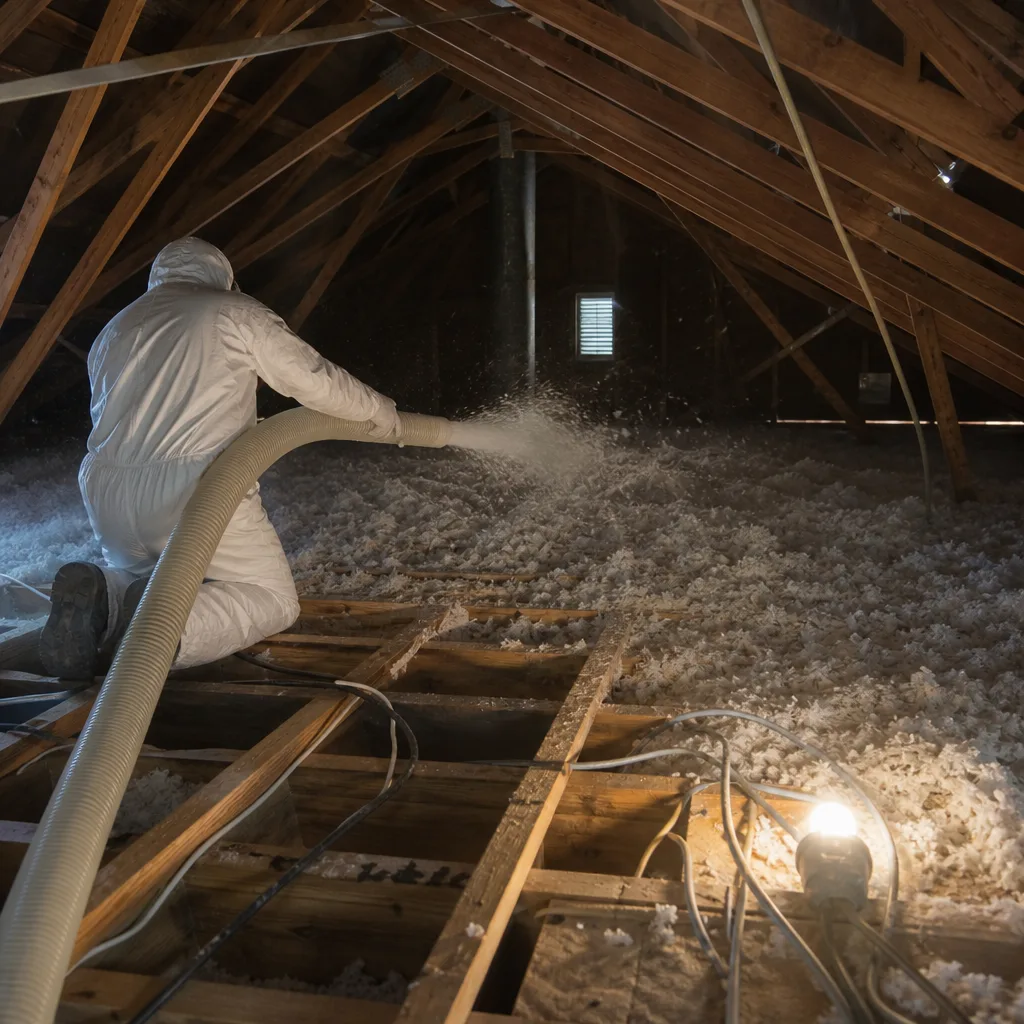
A standard attic insulation top-up in Moreno Valley, adding blown-in fiberglass or cellulose over existing material to reach R-38, typically runs $1,500 to $3,200 for a 1,200 to 1,800-square-foot attic. Full removal of old, compressed batts plus air-sealing and new R-38 blown-in typically falls between $3,800 and $6,500, depending on attic size and the extent of sealing needed. Radiant barrier alone typically runs $1,800 to $3,500 for an average tract home. Attic cleaning, as noted above, runs $800 to $2,500. These are honest ranges for our market, not bait pricing. A free estimate pins down your exact number, and we’ll show you the math line by line.
What moves the price? Attic size, the depth and condition of existing material, whether the attic needs cleaning first, and whether we’re installing batts, blown-in, or spray foam. Tall attics are easier and faster. Low, hot attics take longer. We’ll always tell you which scenario you’re in before we quote.
We Also Serve Cities Near Moreno Valley
Snug Insulation covers Moreno Valley and the surrounding communities in the Inland Empire. We regularly work in Moreno Valley neighborhoods, March Air Force Base housing, Woodcrest, Colton, and Loma Linda. If you’re just outside the city limits, call us and ask – our service area stays focused so our crews stay sharp on local housing stock. Call (844) 241-0737 to confirm we cover your address.
Serving Moreno Valley, CA — Our Local Coverage Area
We’re based in the Moreno Valley area and know this community well. Use the map below to see our service coverage — if you’re nearby, we can almost certainly help.
FAQs About Attic Insulation in Moreno Valley
Your attic is doing exactly what a Moreno Valley attic does in summer: absorbing radiant heat from a sun-baked roof deck and holding it. By mid-afternoon, attic air commonly reaches 130°F, and that heat radiates downward into the living space faster than your AC can remove it. The fix is more attic insulation plus a radiant barrier to reflect heat before it soaks into the insulation. Call (844) 241-0737 and we’ll diagnose it with a thermal reading.
Yes. If you add new insulation over unsealed top plates and can gaps, you slow conductive heat but leave the air-leakage routes wide open. Santa Ana winds will keep pushing attic dust and fiberglass into the living space, and the new insulation will slowly load up with that dust. Air-sealing first is standard practice on every Moreno Valley job we do. We won’t skip it.
We recommend R-38 at minimum for Moreno Valley attics, and R-49 for two-story homes or anyone with high cooling bills. The original R-19 to R-30 installed in older Moreno Valley tract homes was never adequate for this climate, and at this point it’s usually degraded below even that. R-38 is the baseline; R-49 is worth the extra material cost for second-floor comfort. Call (844) 241-0737 for an honest recommendation based on your attic.
Sometimes. If the batts are still intact but just thin, blowing additional insulation over them can work. But if they’re compressed, dirty, or displaced from years of heat and Santa Ana dust, topping off won’t fix the underlying problem. We’ll inspect, test a section, and tell you honestly whether a top-up makes sense or a full removal is the better money spent. Estimates are free.
Yes, for most Moreno Valley homes, and it’s usually one of the better returns you’ll get per dollar. Radiant barrier attacks the roof deck heat directly, reducing the attic temperature before it ever reaches the insulation. More insulation slows heat that’s already in the attic. In a climate like Moreno Valley’s, with relentless summer roof temperatures, the combination is what makes second-floor comfort possible. Call (844) 241-0737 and ask us to model the difference for your house.
Written by Noel Castaneda, Owner at Snug Insulation, serving Moreno Valley and the Inland Empire.
Ready to fix your attic? Call (844) 241-0737 for a free, honest estimate. We’ll inspect what’s up there, show you what we find, and give you a price for exactly what your house needs.