
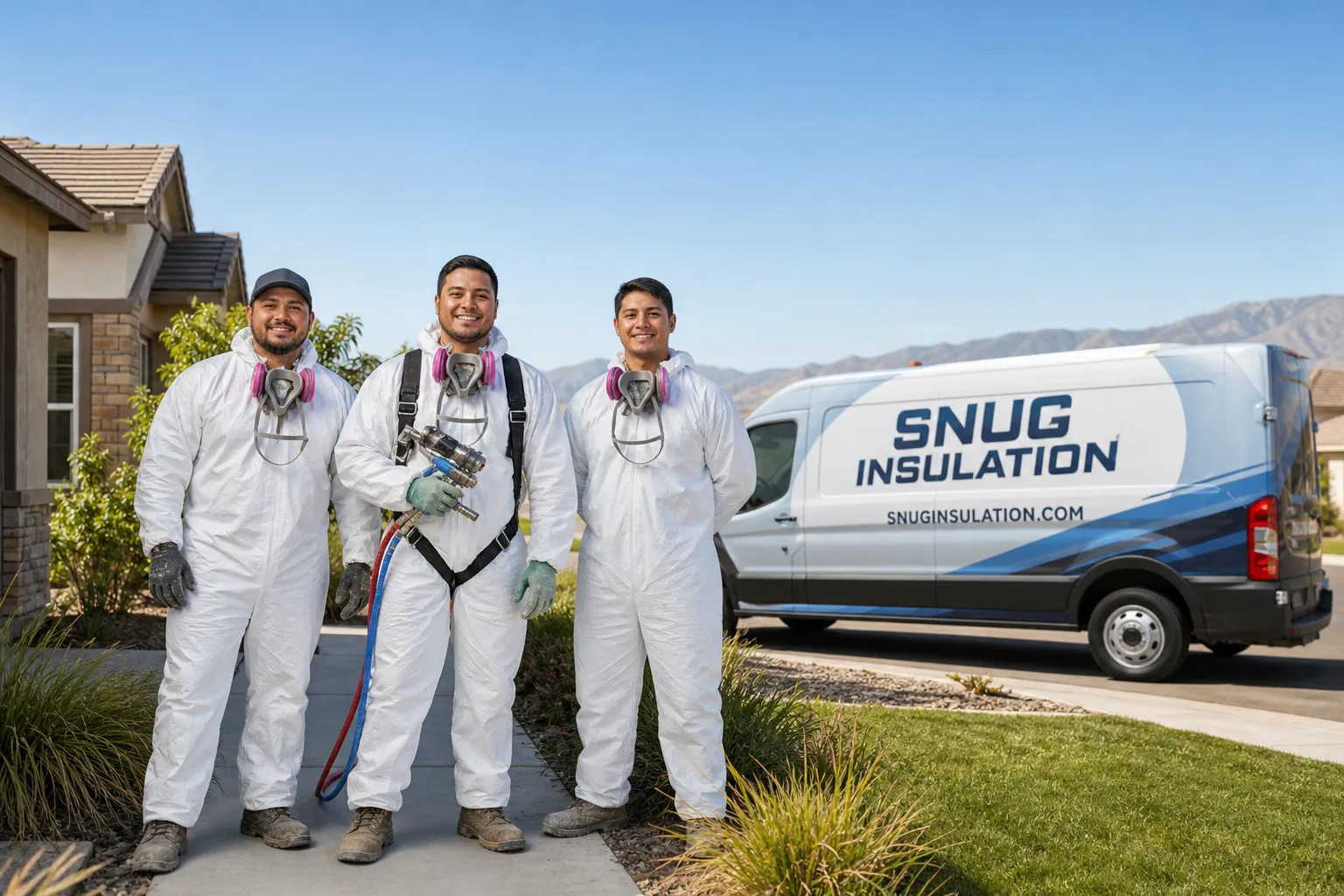
Fast, Reliable Attic Insulation Across Long Beach
Attic insulation in Long Beach is rarely just about staying warm. In the coastal neighborhoods, the real work is moisture control: marine-layer humidity, salt air, and old framing that lets damp air move through the house in ways newer construction was designed to prevent. If your energy bills climb every summer while your AC runs nonstop, or if the upstairs rooms never feel comfortable, the attic is usually where the problem starts. We serve Long Beach daily, from the bungalows near Retro Row to the tract homes across the 90808 corridor. Call (844) 241-0737 and we’ll talk through what’s happening in your attic, not just quote you a number.
Why Snug Insulation Is Long Beach’s Preferred Attic Insulation Company
Snug Insulation does one thing: insulation. We’re not a general contractor who does attics between kitchen remodels. Every technician on our Long Beach jobs is trained specifically on thermal and air-sealing performance, which matters when you’re working in older homes where the framing itself is part of the moisture problem. Our crews know the difference between a 1920s balloon-frame bungalow in 90803 and a 1950s stucco tract house in 90808, because the retrofit approach is not the same.
Long Beach homeowners call us because we stock materials from Owens Corning, Rockwool, and Johns Manville, and we match the product to the specific house rather than installing whatever batts are on the truck. Noel Castaneda leads the team, and his focus has always been the same: seal the envelope first, add insulation second. That sequence matters more in Long Beach than almost anywhere else in Southern California. When a Long Beach customer calls, we can typically have a technician at the property within a day or two, depending on the season and the neighborhood.
Attic Mold Removal in Long Beach
Attic mold removal in Long Beach is a different job than it is ten miles inland. The marine layer that sits over 90802 and 90803 keeps attic dew points high for hours every night, and when humid air hits cool roof sheathing, condensation forms. Mold follows. A homeowner might only notice a musty smell or dark staining on the attic side of the roof deck, but by the time it’s visible, the spores have usually been circulating through the air handler for months. We remove contaminated insulation, treat the affected framing and sheathing, and identify where the moisture is entering before any new material goes back in.
Containment and Material Removal
The moldy insulation has to come out completely. Bagging and removing it through the hatch while running negative pressure keeps spores out of the living space. In Long Beach’s older homes, this often means pulling legacy batts that have been in place since the house was built.
Moisture Source Correction
Mold removal without fixing the moisture entry is a temporary patch. We trace the damp air back to its source: a vented crawlspace, missing baffles, bath fans that terminate in the attic, or unsealed top plates. Closed-cell spray foam at the attic floor or top plates stops the air movement that feeds the mold. Typical attic mold removal in Long Beach runs $1,400 to $3,600, depending on attic size and how far the contamination has spread across the sheathing.
Attic Insulation Removal in Long Beach
Attic insulation removal in Long Beach is often the first step in a proper retrofit, and in the older coastal ZIPs it’s practically mandatory. Legacy batts with kraft or foil facings don’t hold up here. The salt-laden onshore air corrodes the facings, they disbond from the insulation, and what was supposed to be a vapor retarder becomes a moisture trap against the ceiling drywall. Foil facing in particular delaminates within a few years this close to the water. We remove the failed material, inspect what’s underneath, and only then recommend what goes back in. Typical full attic insulation removal in Long Beach runs $900 to $2,200 for a standard bungalow attic.
Legacy Batt and Facing Failures
Insulation that’s survived forty years in Phoenix will fail in five years in Long Beach. The salt is relentless. We handle removal of fiberglass, rock wool, cellulose, and the asbestos-adjacent vermiculite situations that occasionally show up in pre-war homes, always with proper containment and disposal protocol.
Compressed or Contaminated Fill
In shallow 2×4 attic framing, blown-in cellulose or fiberglass that got compressed over decades does almost nothing. Add moisture from marine-layer air and it’s a mat that holds water against the ceiling. Removal gives us a clean deck to air-seal before new insulation goes down, which is the sequence that actually performs.
Trusted Brands We Service in Long Beach
We install and service insulation from the brands Long Beach homeowners ask for by name. For batt applications we carry Owens Corning, Rockwool, Johns Manville, and Knauf. For spray foam we work with closed-cell systems that perform well in high-humidity coastal conditions. Our Long Beach crews stock the common batt sizes and foam kits locally, which means we don’t lose a day driving back to the yard when a 1928 attic turns out to have non-standard joist spacing. If your existing insulation came from one of these manufacturers or from a contractor who’s no longer answering the phone, we can assess it honestly and tell you whether it’s worth saving. Call (844) 241-0737 and we’ll walk you through the options.
Common Attic Insulation Problems We See in Long Beach Homes
- Foil and kraft facings failing from salt air. Within a few miles of the water in 90802 and 90803, the facings on legacy batts corrode and disbond, leaving the vapor retarder flapping against the joists. It’s the most common issue we see on Attic Insulation service calls in Long Beach.
- Marine-layer condensation saturating insulation from below. Vented crawlspaces and balloon-frame walls in pre-war bungalows push humid air up into shallow attics, where it condenses on cool sheathing and soaks the insulation above the ceiling.
- Shallow 2×4 framing limiting cavity depth. Homes from the 1920s through the 1940s were framed with 2×4 ceiling joists, which don’t hold enough insulation to hit modern code. Contractors who blow cellulose to the right depth without air-sealing first create compression and bypass-driven moisture, not performance.
- Multi-unit and rental access complications. A large share of Long Beach housing is rentals or multi-unit properties, especially in the older central ZIPs. Property owners out of state still need the work done, but the logistics of access, coordination with tenants, and code compliance require a contractor who’s done it before.
Pricing for Attic Insulation in Long Beach, CA
Attic insulation in Long Beach typically runs $1,800 to $4,800 for a complete retrofit on a standard bungalow or mid-century home, including removal of the old material, air-sealing, and new insulation. Blown-in cellulose or fiberglass to code depth on a 1,000-square-foot attic starts around $1,700 to $2,600. Batt insulation with Rockwool or Owens Corning products runs slightly higher, typically $2,200 to $3,800, because it includes the labor of fitting and cutting around old framing. Attic baffles and ventilation prep add $300 to $700 on average. In Long Beach’s older homes, the removal cost is usually the first line item, and trying to skip it creates more expensive problems later. Call (844) 241-0737 for a free estimate: we’ll look at the specific attic and give you a real number, not a range pulled from a national database.
We Also Serve Cities Near Long Beach
Snug Insulation covers all of Long Beach plus the surrounding communities. If you’re in Signal Hill, Lakewood, Carson, or West Carson, the same crew and the same material selection apply. The marine-layer moisture problem doesn’t stop at the city line, and neither does our service area.
Serving Long Beach, CA — Our Local Coverage Area
We’re based in the Long Beach area and know this community well. Use the map below to see our service coverage — if you’re nearby, we can almost certainly help.
FAQs About Attic Insulation in Long Beach
Because the existing insulation is usually failing, not just underperforming. In the 1920s through 1940s bungalows that make up much of 90802, 90803, and 90804, the original batts have kraft or foil facings that salt air has corroded and disbonded. The moisture from marine-layer air has soaked or compressed the material. Installing new insulation on top of that traps the moisture against the ceiling and invites mold faster. Removal is the foundation of every good Long Beach attic retrofit. Call (844) 241-0737 to schedule an attic assessment.
In most Long Beach homes, the answer is no, and installing one in the wrong place will cause more harm than good. The marine layer drives moisture upward from vented crawlspaces and into attics, so the goal is to stop air movement at the attic floor, not to trap vapor under the insulation. In older 90802 and 90803 bungalows, we typically seal the top plates and bypasses with closed-cell spray foam, which acts as both an air seal and a vapor control layer, then install insulation without a separate polyethylene barrier. A plastic sheet over the ceiling joists in this climate condenses moisture underneath and rots the drywall.
In 90803, the onshore breeze carries salt particles that deposit on and inside the attic through ridge vents and soffit vents. That salt corrodes foil facings on all types of insulation, causes metal fasteners and vent screens to rust, and accelerates the breakdown of kraft paper facings on legacy batts. The practical result is insulation that loses its vapor-control function within a few years and starts holding dampness against the ceiling. Newer materials like Rockwool Comfortbatt perform far better in this environment because mineral wool is naturally resistant to moisture and doesn’t rely on a facing to function. We recommend a site visit in 90803 before choosing any insulation product; the salt exposure within a half mile of the water is different than it is a mile inland. Call (844) 241-0737 for a free quote.
Mold removal targets the contamination on the sheathing and framing, and it always includes removing the insulation that holds the spores. Insulation removal alone is done when the material is failed, compressed, or wrong for the house, but there’s no active mold growth. Sometimes a Long Beach attic needs both: we remove the moldy material, treat the wood, then pull the remaining insulation that’s too compressed or salt-damaged to reuse. The cost for mold removal runs $1,400 to $3,600 in Long Beach; insulation removal alone runs $900 to $2,200. If you’re not sure which situation you have, call (844) 241-0737 and we’ll help you figure it out over the phone or with a same-week site visit.
Yes. We handle out-of-state owners regularly, especially for rentals in 90813, 90814, and 90815. The process is straightforward: we communicate with the owner by phone or email, coordinate access with the tenant, and provide photos and a written scope before any work begins. Long Beach’s rental inspection program means attic work often needs to be done to pass city requirements, and we’re familiar with what inspectors in Long Beach look for. If the owner can’t be on site, we’ll walk the property and send a detailed report with measurements and recommendations. Call (844) 241-0737 and we’ll set it up.
If your attic has never been properly sealed or insulated and you’re tired of paying for air that leaks straight through the roof, call us at (844) 241-0737 for a free estimate. Snug Insulation serves every Long Beach neighborhood, from the coastal flats of 90803 to the tract homes of 90808, and we’ll give you a straight answer about what your attic actually needs.
Written by Noel Castaneda, Owner at Snug Insulation, serving Long Beach and the surrounding communities.