Fast, Reliable Attic Insulation Across Koreatown
Attic insulation in Koreatown usually costs between $1,800 and $4,200 for a typical retrofit, and on most apartment buildings and older bungalows along 6th Street and Western Avenue we can be on site within 24 to 48 hours. Koreatown’s housing stock is different from almost anywhere else in Los Angeles: dense mid-century apartment buildings, flat roofs, and attics that barely exist. The work here is less about laying batts over joists and more about blowing insulation into low-clearance cavities where other crews give up. Our team knows the alleys, the narrow lots, and the buildings. If your top-floor unit bakes in summer or you feel heat bleeding through the ceiling, call (844) 241-0737 and we’ll come take a look.
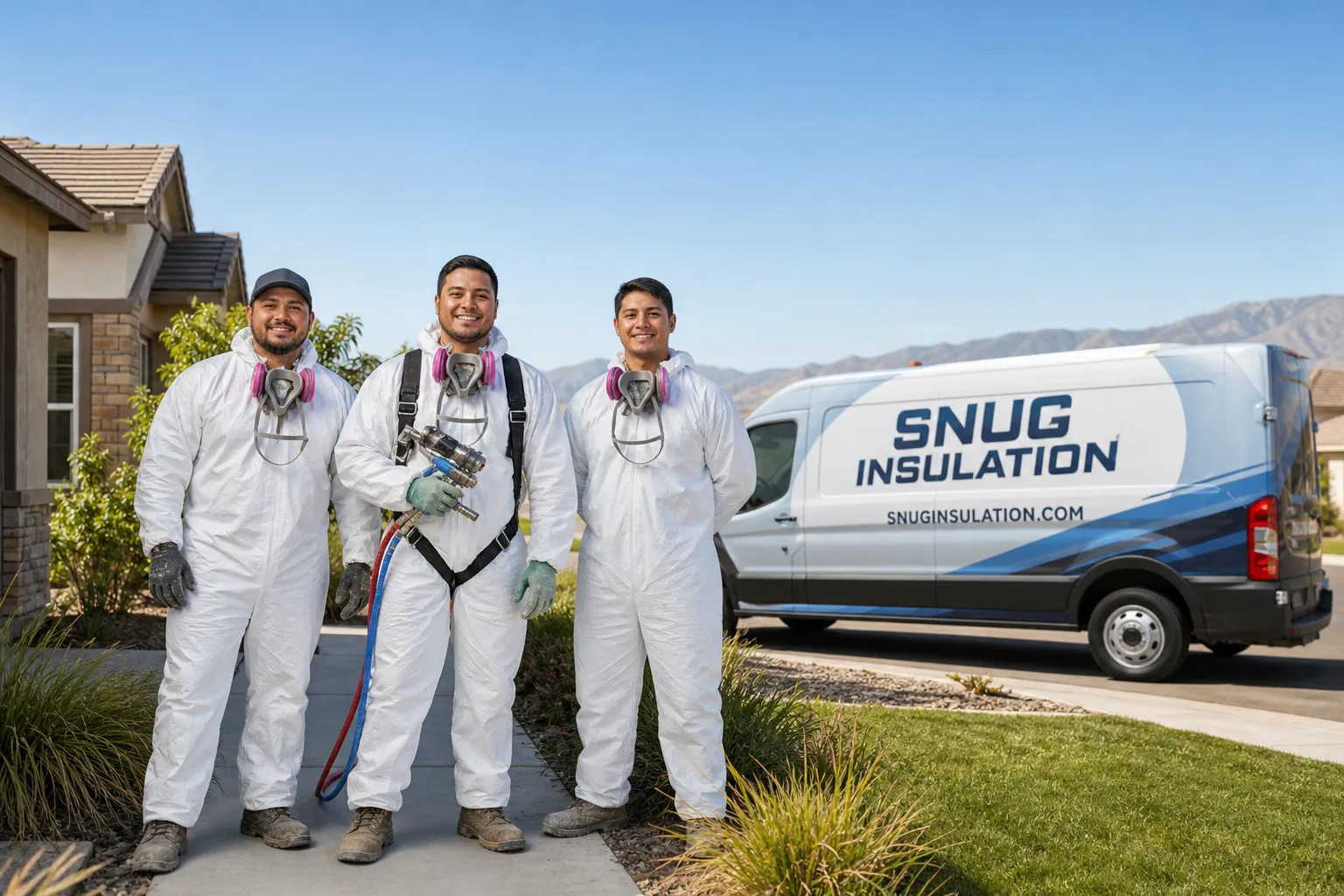
Noel Castaneda leads our crew, and he’s spent enough time on Koreatown roofs to know what actually works here. The buildings aren’t like the single-family homes you’ll find in Silver Lake or Echo Park. They’re older, tighter, and full of surprises. That’s exactly why we built our approach around Koreatown’s reality, not around a generic attic job template.
Why Snug Insulation Is Koreatown’s Preferred Attic Insulation Company
Most attic insulation companies in Koreatown are generalists. They’ll do roofing, drywall, maybe some HVAC, and insulation when it comes up. We don’t. Insulation is the only thing we do, and we’ve built our entire operation around the material-matching decisions that actually change how a Koreatown apartment or bungalow feels. When you’re dealing with a flat-roof building on Western Avenue that has six inches of roof cavity and no attic access, the wrong material choice means a wasted day and a building that’s still hot. We work with Owens Corning, Rockwool, and GreenFiber specifically because Koreatown buildings need different materials for different cavity types. We don’t show up with whatever batts were cheapest at the supply house. We show up with options and a plan.
Our customers in Koreatown talk about two things most: the heat in top-floor units and the dust problem when someone tries to insulate a building while tenants are living below. We’ve built our process around both. That means sealing and cleaning the roof cavity before we blow anything in, and it means coordinating access through alleys when there’s no side yard to stage equipment. Homeowners in Koreatown have told us they appreciate a crew that understands their building isn’t like a suburban house. That’s not an accident. It’s because we treat Koreatown jobs like Koreatown jobs, not like a copy of a job we did in Moreno Valley.
Response time matters here. Koreatown’s dense, rent-controlled apartment stock means a failing roof cavity above occupied units becomes a livability problem fast. We schedule Koreatown visits within two business days in most cases, and we’ll give you an honest window so you’re not waiting around. If a top-floor unit is already overheating at 4 p.m., that’s not something to put off.
Attic Cleaning Services in Koreatown
Attic cleaning services in Koreatown are where a lot of our insulation jobs have to start, and that catches people off guard. Older Koreatown bungalows from the 1920s and 1930s, plus the 1960s and 1970s apartment buildings along 6th Street, often have roof cavities full of old debris: rodent droppings, dust from decades of smog and dry air, scraps left by previous contractors, and sometimes mold from a roof leak that was patched but never properly dried. You can’t blow insulation over that. It traps the problem under a blanket. We clean the cavity first, sanitize what needs sanitizing, and then insulate. In Koreatown, a standalone attic cleaning job typically costs $450 to $900 depending on cavity size, accessibility, and how much debris has to be removed. When it’s part of an insulation retrofit, it’s priced into the full scope. Call (844) 241-0737 and we’ll walk you through it.
What a Koreatown roof cavity actually holds
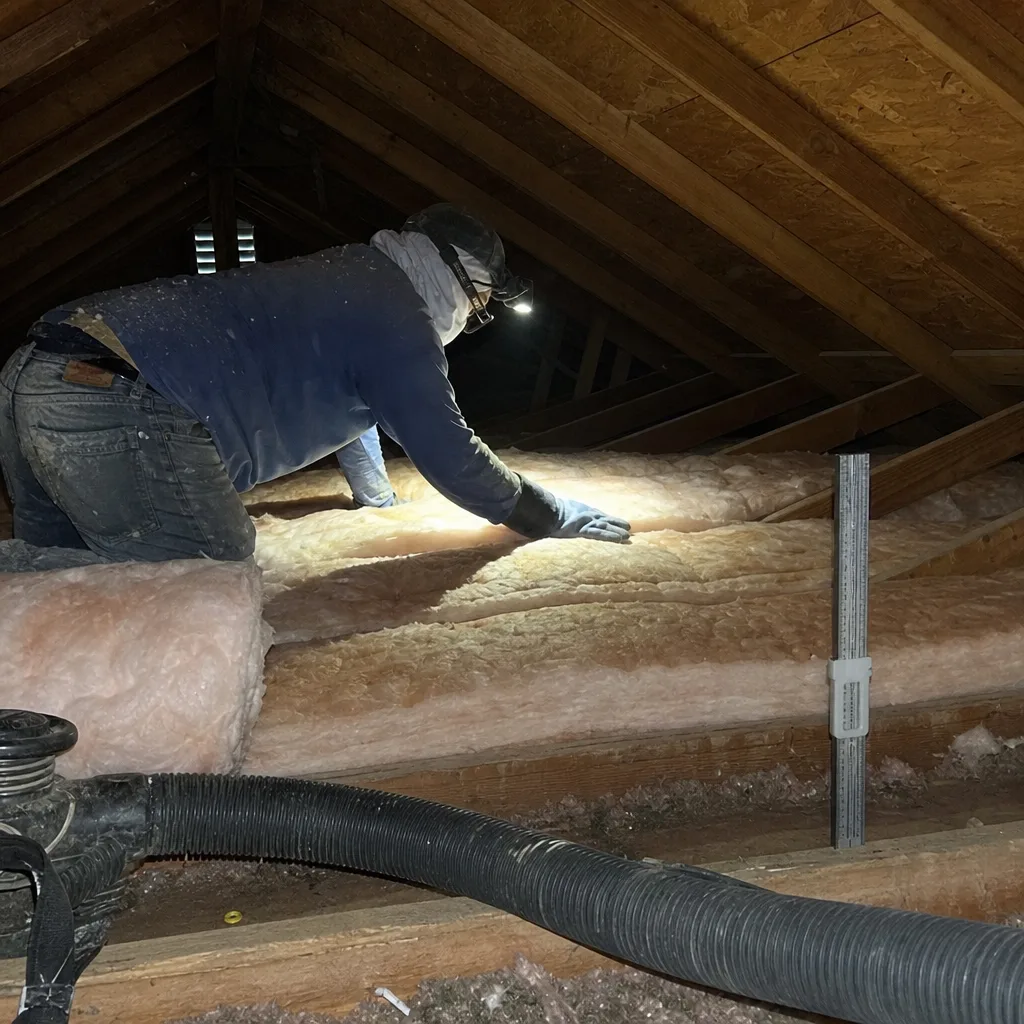
We’ve pulled out everything from old pigeon nesting to decomposing fiberglass batts that were installed badly in the 1980s. In buildings near Wilshire Boulevard and 6th Street, decades of wind-blown dust settles into flat-roof cavities because there’s no attic airflow to move it out. We remove it, vacuum the cavity, and treat any musty areas before insulation goes in. This step also keeps dust from pushing down into tenant units below, which is a real problem on occupied retrofits.
When cleaning is a must before insulating
If you smell something musty in a top-floor Koreatown unit, or if you’ve had roof leaks in the past, cavity cleaning is non-negotiable before you add insulation. Insulation doesn’t fix moisture problems. It seals them in. We’d rather tell you the cavity needs cleaning first than sell you a job that fails in two years.
What happens when you call
- 1
A real person answersNo phone trees — you reach a local pro.
- 2
You get an upfront price rangeHonest numbers before anyone is dispatched.
- 3
A background-checked tech heads outLicensed & insured, dispatched right away.
- 4
You approve before work beginsNothing starts until you say go.
Attic Mold Removal in Koreatown
Attic mold removal in Koreatown comes up more than you’d expect, especially on older apartment buildings and bungalows with original flat roofs. The pattern is familiar: a roof leak gets patched but the water that got into the roof cavity never dried out. In Koreatown’s warm basin climate, that damp, dark cavity becomes a mold incubator within a season. We remove contaminated insulation, treat the affected framing and sheathing, and dry the cavity before new insulation goes in. A Koreatown attic mold removal job typically ranges from $800 to $1,800 depending on the square footage involved and whether the mold is localized or spread across the entire roof plane. It’s not glamorous work, but it’s the difference between a building that smells clean on the third floor and one that doesn’t. If you’ve got a musty smell in a top-floor unit, call (844) 241-0737 for an honest assessment.
Why flat-roof cavities hold moisture
Koreatown’s low-slope and flat roofs don’t shed water the way pitched roofs do. A small crack in roofing membrane can quietly feed moisture into the cavity for months before anyone notices. By then, the old insulation is wet and the framing may be showing mold blooms. We find this constantly on 1960s and 1970s apartment buildings around Western Avenue and 6th Street.
Treating the cavity, not just the surface
Surface cleaning doesn’t fix a mold problem in a roof cavity. You have to remove the contaminated material, treat the wood, and confirm the cavity is dry. Then we seal and insulate. We won’t blow GreenFiber or install Rockwool over active mold. It’s a waste of your money and it fails fast.
Trusted Brands We Service in Koreatown
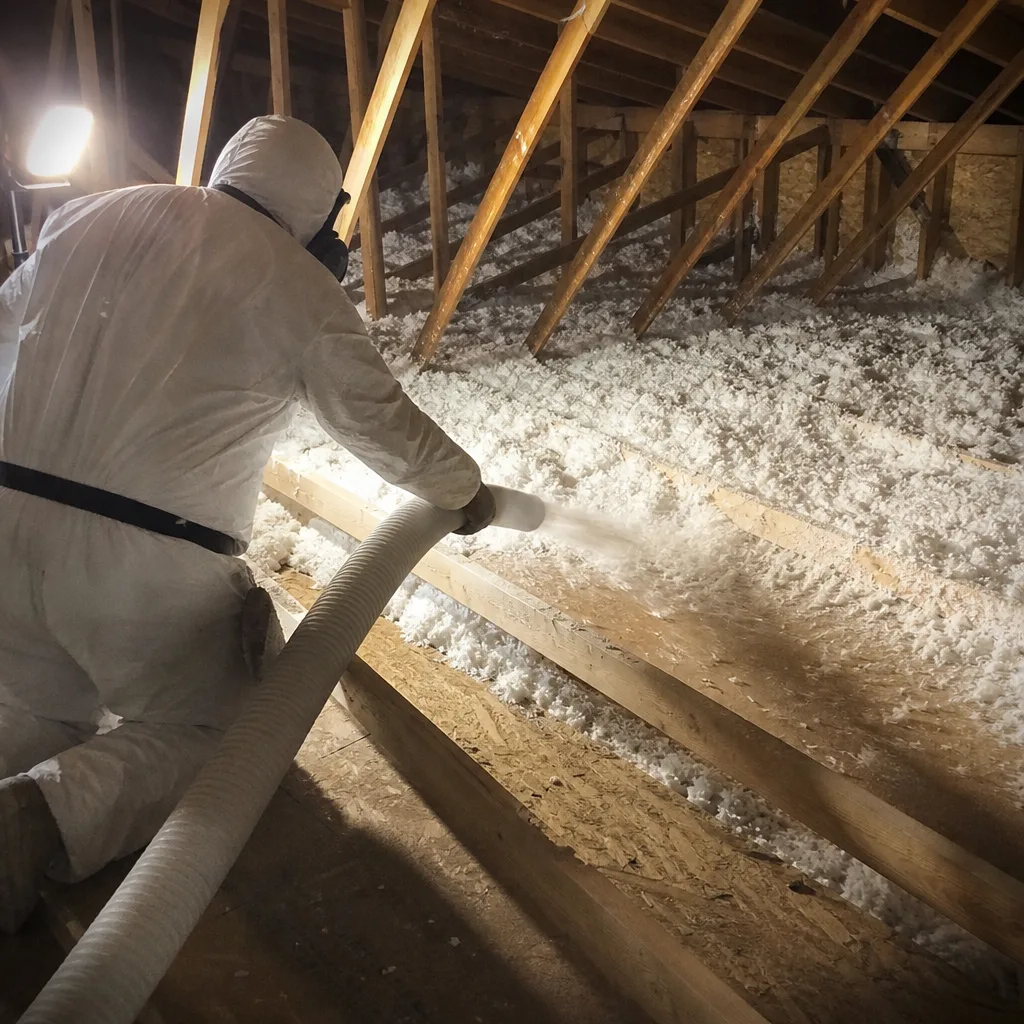
We service all the major insulation brands that make sense for Koreatown’s building types, and we stock the common materials locally so turnaround stays fast. For low-clearance flat-roof cavities, we often recommend GreenFiber loose-fill cellulose because it fills irregular cavities completely and carries strong recycled content. Where fire resistance and sound dampening matter between units, Rockwool mineral wool is a standout and we’re one of the few crews in Koreatown that regularly installs it. For standard joist bays in the older bungalow stock, Owens Corning fiberglass remains a solid, cost-effective choice. We don’t push one brand. We match what works to the cavity, the building, and your budget. You can learn more about our Attic Insulation brand portfolio and how we choose materials for each job.
Common Attic Insulation Problems We See in Koreatown Homes
- Low-clearance flat-roof cavities that can’t take batts. Koreatown’s 1960s and 1970s apartment buildings often have only four to ten inches of roof cavity, which means standard fiberglass batts won’t fit. We blow loose-fill into these spaces instead, which fills the cavity completely and gives real R-value in a space where batts would compress and fail.
- Zero-lot-line access that stalls equipment. Many Koreatown buildings share side walls with neighbors. There’s no side yard to park a truck or run a hose, so we load through alleys and stage hose runs from 6th Street or Western Avenue. Crews that don’t plan for this end up blocking traffic or canceling the job.
- Old knob-and-tube wiring in prewar bungalows. The 1920s and 1930s single-family homes in Koreatown often still have original knob-and-tube wiring in the attic or roof cavity. Insulation can’t cover live knob-and-tube safely, so we identify it during the estimate and coordinate with an electrician to address the issue before we insulate.
- Tenants living below during the retrofit. Most Koreatown apartment buildings are occupied when we work. Dust and debris from the roof cavity can push down into units if the cavity isn’t sealed and cleaned first. We do the cleaning and sealing as part of the job, and we protect tenant access throughout the day.
Pricing for Attic Insulation in Koreatown, CA
Here’s what attic insulation in Koreatown actually costs, based on the building types we work on here. A low-clearance flat-roof cavity above a two- or three-story apartment building typically runs $2,500 to $4,500 for the full insulation and sealing scope. Attic insulation in a 1920s or 1930s Koreatown bungalow with a conventional joist bay usually lands between $1,800 and $3,200. Attic insulation top-up, where you’re adding loose-fill over existing insulation that’s still in decent shape, runs $900 to $1,800 depending on the square footage. Attic baffles and ventilation prep add $300 to $700 when the existing venting needs to be corrected. These are honest ranges for the Koreatown market, not national averages. The exact number depends on cavity depth, access difficulty, and whether we’re cleaning or treating mold first. Call (844) 241-0737 for a free estimate. We’ll give you a number you can actually use.
We Also Serve Cities Near Koreatown
We work throughout central Los Angeles and the surrounding basin. In addition to Koreatown, we regularly insulate attics and roof cavities in Los Angeles neighborhoods including Echo Park, Silver Lake, and Hollywood. If you’re just across the border in one of those areas, give us a call and we’ll let you know how soon we can get there. The same crew, the same careful material matching, and the same focus on older urban housing stock.
Serving Koreatown, CA — Our Local Coverage Area
We’re based in the Koreatown area and know this community well. Use the map below to see our service coverage — if you’re nearby, we can almost certainly help.
FAQs About Attic Insulation in Koreatown
Yes, and this is the single most common job we do in Koreatown. Many of the apartment buildings along 6th Street and Western Avenue have flat roofs with only a few inches of cavity between the ceiling and the roof deck. We blow loose-fill insulation, usually GreenFiber cellulose or blown fiberglass, into that cavity through small access points. The material fills the entire space and delivers real thermal performance where batts physically can’t go. It’s the same approach we used on a 1970s three-story building near 6th and Western where the top-floor units had been overheating every summer afternoon. Call (844) 241-0737 if you’re dealing with a flat-roof Koreatown building and want to know what’s actually possible.
We plan the load-in before a truck ever leaves the yard. On Koreatown’s zero-lot-line buildings, that usually means running our hose from the street or through an alley and staging equipment on the smallest possible footprint. We don’t need a side yard. We’ve loaded jobs through alley access where the hose run was over 150 feet and the building next door was six inches away. It adds logistics, but it’s what the job requires. If you’re worried about access on your Koreatown property, give us the address and we’ll tell you exactly how we’d handle it.
No. A properly run attic insulation job in Koreatown doesn’t require tenants to leave, and we’ve done hundreds of occupied retrofits without displacing anyone. The key is how we prepare: we clean and seal the roof cavity before insulating, which stops dust and debris from pushing down into units below. We also protect entry and stairwell areas where our crew passes through. Tenants can stay in their units while we work. The one exception is if we discover live knob-and-tube wiring that needs an electrician’s attention. In that specific scenario, we’d coordinate with the property owner to schedule the electrical work separately before touching the insulation. Call (844) 241-0737 to discuss your building’s specifics.
In most cases, yes, attic insulation makes the biggest single difference for top-floor Koreatown units. These buildings absorb heat all day, and with no real attic space, the roof cavity transfers that heat directly into the units below. By late afternoon, top-floor apartments can be 10 to 15 degrees warmer than lower floors. A properly sealed and insulated roof cavity blocks that thermal transfer. On the 1970s building near 6th and Western where we blew GreenFiber into a tight flat-roof cavity, the top-floor units stopped overheating by late afternoon after the job was done. Insulation is the highest-impact fix available for this specific Koreatown problem. Call (844) 241-0737 to discuss whether your building is a good candidate.
Knob-and-tube wiring is a real concern on Koreatown’s 1920s and 1930s bungalows and some early apartment buildings. You cannot safely bury live knob-and-tube under insulation. The wiring needs clearance to dissipate heat, and covering it creates a fire risk. We inspect for it during every Koreatown attic estimate. If we find it, we’ll tell you honestly what needs to happen first, and we’ll coordinate with a licensed electrician to address the wiring before we touch the insulation. We won’t insulate over live knob-and-tube, no matter how much you want the job done. Call (844) 241-0737 and we’ll let you know what you’re working with.
Written by Noel Castaneda, Owner at Snug Insulation, serving Koreatown and greater Los Angeles.
Ready to get your Koreatown attic or roof cavity properly insulated? We’ll come out, take a real look, and give you an honest plan with clear numbers. Estimates are free, and we answer the phone. Call (844) 241-0737 any weekday and we’ll get you scheduled.