
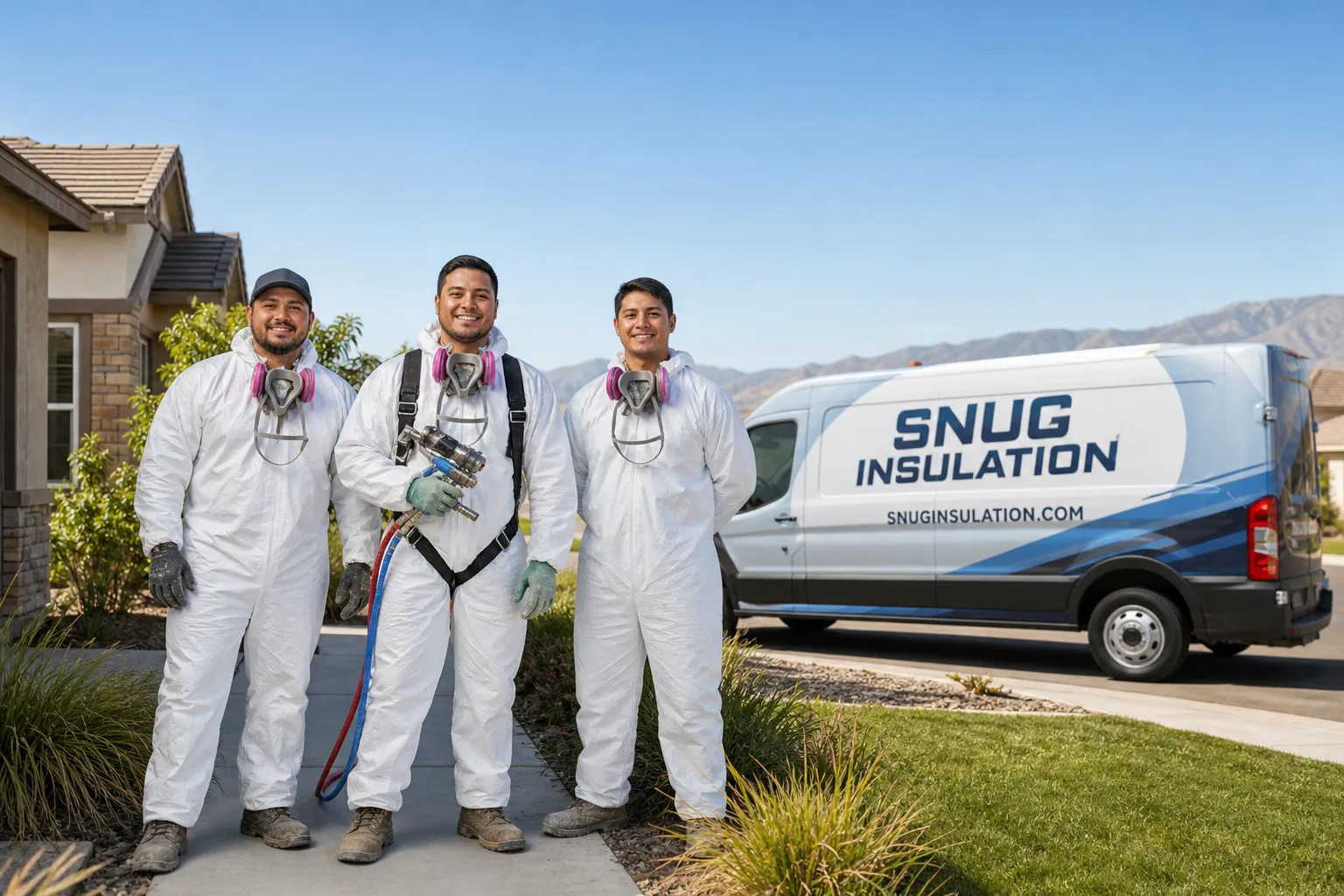
Fast, Reliable Attic Insulation Across Apple Valley
Attic insulation in Apple Valley, CA typically runs $1,850 – $3,400 for a full replacement on a standard single-story ranch, with top-ups and smaller jobs starting around $700. Most of our Apple Valley work is completed same-day or next-day, and our crews know the 92307 and 92308 ZIPs block by block. If your attic bakes to 140°F in July and your bedrooms still feel cold at dawn in January, the problem isn’t your thermostat. It’s what’s happening between your ceiling and your tile roof. Call (844) 241-0737 and we’ll come take a look.
Why Snug Insulation Is Apple Valley’s Preferred Attic Insulation Company
Apple Valley homeowners call us because we treat the attic as a system, not a cavity to stuff with fiberglass. Noel Castaneda built Snug Insulation around one trade: insulation. Every technician on our crews works exclusively on thermal and air-sealing performance. That means when we walk a Spanish tile-roof ranch off Central Road, we’re looking at the roof deck, the ventilation, the ceiling plane, and the ducts together. Not just R-value.
We’ve worked homes from the older ranch developments near Highway 18 to newer custom builds in the 92307 ZIP and manufactured homes throughout 92308. The common thread is that Apple Valley attics take a beating from both directions: July sun bakes the underlayment and winter nights freeze whatever wasn’t sealed. Our crews arrive from our Moreno Valley base with the right materials on the truck because we already know what Apple Valley homes need. Call (844) 241-0737 and we’ll have someone out to your property fast, often the same day.
Insulation Contractors in Apple Valley
Insulation Contractors in Apple Valley need to understand tile roofs and High Desert wind. This isn’t a coastal climate where you can blow in fiberglass and walk away. Our insulation contractor work in Apple Valley typically involves removing sun-baked, wind-scoured batts, air-sealing the ceiling plane, correcting attic ventilation, then installing the right insulation for your specific roof and budget. A typical project in Apple Valley runs $1,850 – $3,400 for a full replacement, with top-ups and partial jobs from $700.
What the Work Actually Involves
We pull back the old material, inspect the felt underlayment and deck, seal top plates and can lights and any ceiling penetrations, then re-insulate. On Apple Valley ranch homes from the 1980s and 1990s, we regularly find R-11 or R-19 batts that have compacted to half their rated value. The fix is rarely “add more on top.” It’s usually “remove, seal, ventilate, then rebuild the R-value.”
When Apple Valley Homeowners Should Call
If your attic insulation has been in place since the house was built, or you can see bare drywall up there, or your energy bills spike every summer, it’s time. Homes with tile roofs need attention sooner than most because failed underlayment sheds grit onto the insulation and lets wind blow it off the ceiling plane. Delaying the fix doesn’t make it cheaper. It makes the damage deeper.
Attic Ventilation in Apple Valley
Attic Ventilation in Apple Valley is the step most insulation estimates skip, and it’s the step that determines whether your new R-value survives its first High Desert summer. Apple Valley attics can hit 150°F in July. Without balanced intake and exhaust, that heat bakes batts, degrades radiant-barrier facing, and forces your HVAC to work against a superheated ceiling. Ventilation correction in Apple Valley typically costs $450 – $950 as part of a larger attic insulation project.
Intake, Exhaust, and the Tile-Roof Problem
Many Apple Valley homes have adequate exhaust vents but poor intake at the eaves, especially on older ranch builds with narrow soffits. The pressure imbalance pulls dust and grit into the attic and accelerates insulation breakdown. We correct the intake/exhaust balance before any insulation goes in, so the new material stays where we put it.
Underlayment Checks Before You Add R-Value
Tile-roof felt underlayment in Apple Valley fails long before the tile itself. When it cracks and sheds, grit lands on whatever insulation is below it and the deck starts leaking in ways you won’t see from the living room. Any honest re-insulation estimate for an Apple Valley tile roof should include an underlayment and ventilation check. Otherwise you’re installing new insulation over a leaking deck, and the next wind event will blow it off the ceiling plane.
Trusted Brands We Service in Apple Valley
We stock and install materials from Johns Manville, Rockwool, and CertainTeed for our Apple Valley customers, along with our other manufacturer partners. That matters here because different Apple Valley homes need different things: a 1970s ranch with a tile roof may want Rockwool for its moisture tolerance and fire resistance, while a newer custom build might be better served with CertainTeed fiberglass or a blown-in cellulose system. We don’t push one brand. We match the material to the assembly and the homeowner’s priorities, whether that’s recycled content, sound damping, or maximum thermal resistance. And because we stock locally, turnaround for Apple Valley jobs is fast.
Common Attic Insulation Problems We See in Apple Valley Homes
- Sun-baked batts near gable vents. On homes along Bear Valley Road and throughout the 92307 ZIP, we see fiberglass batts that have been cooked brittle and blown back from the gable vents by wind, leaving bare drywall over the bedrooms. That bare drywall radiates heat straight into the house on 100°F afternoons.
- Failed tile-roof underlayment shedding grit. The felt under the tile bakes and cracks long before the tile fails. Grit and dust filter down onto the insulation, masking the real leak source and degrading whatever R-value is left.
- Attics doubling as HVAC chase. In Apple Valley’s ranch homes, the ducts run through the attic. When insulation is compacted and wind-scoured, those ducts sit in superheated or freezing air, so you lose cooling in July and fight condensation in January.
- Compacted R-11 and R-19 from the original build. Homes built between the 1960s and 1990s in Apple Valley often still have their original insulation, compacted to half its rated value. The ceiling plane reads like it’s barely insulated at all, even though the homeowner “has insulation.”
Pricing for Attic Insulation in Apple Valley, CA
Here’s what we see in the Apple Valley market right now. Full attic insulation replacement on a typical single-story ranch runs $1,850 – $3,400 depending on square footage, access, and whether we’re doing ventilation and air-sealing as part of the job. Insulation top-ups over existing material run $700 – $1,500. Attic ventilation correction typically adds $450 – $950. If you have a tile roof, budget for an underlayment check as part of any estimate. Call (844) 241-0737 for an exact quote. Estimates are free, and we’ll walk you through what we’re actually seeing in your attic before we quote a number.
We Also Serve Cities Near Apple Valley
Beyond Apple Valley, our crews cover the neighboring High Desert communities of Apple Valley proper plus Mountain View Acres, Spring Valley Lake, Victorville, and Hesperia. If you’re anywhere in the Victor Valley and your attic is underperforming, call (844) 241-0737. We’re nearby and can usually schedule within a day or two.
Serving Apple Valley, CA — Our Local Coverage Area
We’re based in the Apple Valley area and know this community well. Use the map below to see our service coverage — if you’re nearby, we can almost certainly help.
FAQs About Attic Insulation in Apple Valley
Because the tile looking fine doesn’t mean the felt under it is fine. In Apple Valley, the felt underlayment bakes in 100°F+ attic heat and fails years before the tile does. When it cracks, it sheds grit onto your insulation and lets wind blow it off the ceiling plane. If we skip the ventilation and underlayment check, we’d be installing new R-value over a leaking deck. That’s money wasted. Call (844) 241-0737 for an estimate that includes the full picture.
Yes. The right assembly reflects and resists summer radiant gain while trapping heat on winter nights. That’s the desert double-duty problem: your attic needs to shed heat in July and hold it in January. We spec the material and ventilation to do both, not one or the other. It’s why material choice matters here more than in coastal climates.
We work with Johns Manville, Rockwool, CertainTeed, and several other manufacturers. What we put in your attic depends on your roofline, your ventilation, and your priorities. A tile-roof ranch prone to moisture may get Rockwool. A newer custom build with tight framing may get CertainTeed batts or a blown-in cellulose system. We’ll show you the options and explain the tradeoffs.
In most cases, it’s air leakage, not insulation. The top plates, can lights, and ceiling penetrations were never sealed, so cold night air moves through the attic and into the living space even when batts are present. Apple Valley’s big day-night swings make this worse: the attic cools fast after sunset, and unsealed gaps pull that cold straight down. We air-seal before adding R-value. Call (844) 241-0737 and we’ll inspect what’s actually happening up there.
Yes. Manufactured homes typically have shallow attic cavities and limited access, so we often spec dense-pack cellulose or thin-profile batts to hit the R-value without cramming. Newer custom builds usually have deeper trusses and can handle higher R-value systems, including blown-in or spray foam. The right answer depends on the structure, not a generic recommendation. That’s why we walk every Apple Valley attic before we quote.
If your Apple Valley attic is hot in July, cold in January, or your energy bills don’t match the square footage, call us at (844) 241-0737. We’ll come out, look at what’s actually up there, and give you a straight answer on what it takes to fix it. Free estimates, no pressure.
Written by Noel Castaneda, Owner at Snug Insulation, serving Apple Valley and the High Desert.