

Fast, Reliable Attic Insulation Across Stanton
Attic insulation in Stanton comes down to one thing most of the time: stopping radiant heat from a low-pitch roof cooking your ceilings all afternoon. We work throughout 90680, from the grid of stucco tract homes off Beach Boulevard up to the quieter streets near Cerritos Avenue. Most calls we get are from homeowners whose attics were under-insulated in the 1950s and 60s and have never been touched since. When you call (844) 241-0737, you reach Noel Castaneda’s team directly, and we can usually be on your street within a day or two, not a week.
Why Snug Insulation Is Stanton’s Preferred Attic Insulation Company
Stanton homeowners keep calling us because we do one trade and nothing else. We are not a general contractor squeezing insulation between kitchen remodels. Our Attic Insulation crews spend every workday in crawl spaces, attics, and roof decks. That focus matters in Stanton, where shallow attics and close-set houses leave no room for guesswork. We know what happens when a low-slope roof with neighbor-facing soffits gets filled with the wrong material or vented incorrectly. Homeowners here tell us the same thing: the upstairs bedrooms feel 10 to 15 degrees hotter than the rest of the house by mid-afternoon. That is a venting and insulation failure, not normal summer heat.
We also know the streets here. Stanton is only about three square miles, and we have worked from the neighborhoods near the Civic Center over to the 22 freeway side. That means we schedule tight, show up when we say we will, and we do not need GPS to find your cross streets. Our service area runs directly into Garden Grove and Westminster, so we keep trucks and material nearby, not an hour away in another county.
Radiant Barrier in Stanton
Radiant Barrier is the first thing we recommend for Stanton homeowners with flat or low-pitch roofs and unshaded west-facing walls. On a 95-degree summer day, the underside of an uninsulated roof deck in Stanton can hit 140 to 150 degrees. A radiant barrier stapled under the roof deck reflects much of that heat back out before it ever reaches your insulation or your ceiling. It works differently than insulation. Insulation slows heat transfer. A radiant barrier blocks radiant heat. For a typical 900 to 1,200 square foot Stanton attic, a radiant barrier added during an insulation retrofit usually runs $1,200 to $2,800, depending on roof configuration and access.
Low-slope roof deck applications
Stanton has a lot of flat and low-pitch roofs, far more than you see in newer Orange County developments. That geometry changes how we staple and seal radiant barrier. We leave an air gap, because radiant barrier needs space to work; pressed tight against the deck, it becomes a conductor instead of a reflector. On low-slope decks we often pair the barrier with baffles to keep airflow moving toward ridge or gable vents.
When radiant barrier beats more insulation
If your attic already has fiberglass or cellulose at roughly R-30 but the rooms below still bake by 4 p.m., adding more insulation will not fix the problem. The heat is radiant, coming straight off the roof deck. In that case a radiant barrier gives you more comfort per dollar than another six inches of fill. Noel Castaneda has walked dozens of Stanton attics where this one change dropped ceiling temperatures measurably within a week.
Attic Cleaning Services in Stanton
Attic Cleaning Services in Stanton are rarely just about dust and old storage boxes. On these post-war stucco houses, soffit vents are often buried under decades of blown-in material, or blocked by paint, cobwebs, and debris from the tight eave bays. A full clean-out before new insulation runs $600 to $1,600 for a typical Stanton single-story home, depending on square footage and how much old material has to be bagged and removed. You cannot blow new fiberglass over a vent-choked attic and expect it to perform. The new insulation will just trap the same superheated air that baked the old fill.
Removing settled fill and debris
On older Stanton homes, original mineral wool or rock wool has often compacted down to two inches or less. It looks like a gray mat pressed into the ceiling joists. Removing it is the only way to see the vent path and the top plates behind it. We bag everything, vacuum the deck, and if there is rodent or pest evidence, that gets addressed before any new material goes in.
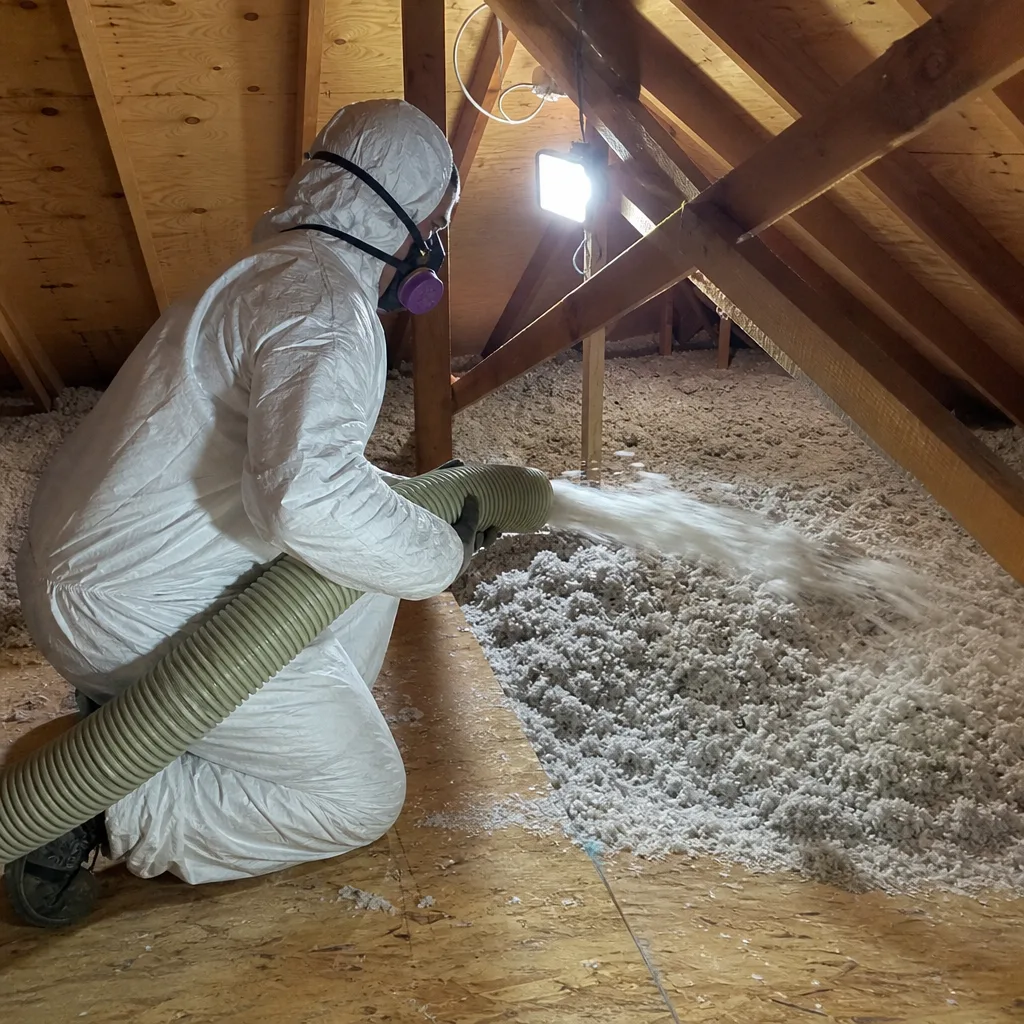
Prepping vents before blown-in work
Before we blow in new insulation, we verify every soffit and eave bay can actually move air. In Stanton, where houses sit four or five feet from the neighbor, soffits often pull air from the adjacent roof or wall, not open sky. That means we install baffles on nearly every retrofit here. Without them, blown-in material drifts into the eave and shuts down the only ventilation your attic has.
What happens when you call
- 1
A real person answersNo phone trees — you reach a local pro.
- 2
You get an upfront price rangeHonest numbers before anyone is dispatched.
- 3
A background-checked tech heads outLicensed & insured, dispatched right away.
- 4
You approve before work beginsNothing starts until you say go.
Trusted Brands We Service in Stanton
We install and service insulation from Owens Corning, Johns Manville, and Rockwool, and we keep common batt sizes and blown-in bags stocked specifically for the low-clearance attics we see across Stanton. That means less waiting on material runs when your job is scheduled. Owens Corning fiberglass works well for blown-in retrofits in these tight attics. Rockwool mineral wool is a smart choice on exterior wall sections or anywhere moisture and fire resistance matter. Johns Manville gives us a solid batt option for walls and crawlspaces. When you call, Noel Castaneda will match the material to your specific roof and vent configuration, not to whatever happens to be on the truck.
Common Attic Insulation Problems We See in Stanton Homes
- Settled original insulation exposing the top plate. Mineral wool and early fiberglass compact over 60-plus years. On Stanton’s stucco tract homes, that leaves the outer few inches of ceiling bare, and heat pours straight down the wall line into living spaces.
- Soffit vents choked by dense pack or debris. The eave bays on close-set lots are small to begin with. When insulation drifts into them, or decades of dust and paint seal them off, attic air stops moving. Temperatures climb and new insulation degrades faster than it should.
- Corroded vent screens and fasteners near the coast. Stanton is inland, but close enough to coastal air that vent screens and fasteners rust out years earlier than they do in, say, Riverside. Failed screens let rodents and birds into the attic, and then you are paying for cleaning and exclusion before insulation work can start.
- Attic temperatures over 140°F on unshaded lots. Most Stanton homes have no mature shade trees. The afternoon inland heat radiates off stucco walls and straight through the roof deck. Insulation alone cannot fix that; it takes venting, radiant barrier, and sometimes both.
Pricing for Attic Insulation in Stanton, CA
For a typical 1,000 to 1,400 square foot Stanton single-story home, full attic insulation replacement runs $2,800 to $5,500. That includes removal of old settled material, baffle installation, air sealing around penetrations, and blown-in Owens Corning fiberglass to R-38 or R-49. A top-up over existing insulation, where the old fill is still in decent shape, runs $1,200 to $2,400. Radiant barrier alone typically adds $1,200 to $2,800. Attic cleaning and prep on its own is $600 to $1,600. Call (844) 241-0737 and we will give you a firm quote before any work begins, based on an actual look inside your attic, not a square-footage guess over the phone.
We Also Serve Cities Near Stanton
We are based in Moreno Valley and run trucks into Stanton every week. Our crews also cover Garden Grove, Cypress, Westminster, and Midway City, so if you have a rental or a family member just over the city line, we can usually handle both jobs in the same trip. You can learn more about our work across the area on our Stanton service page.
Serving Stanton, CA — Our Local Coverage Area
We’re based in the Stanton area and know this community well. Use the map below to see our service coverage — if you’re nearby, we can almost certainly help.
FAQs About Attic Insulation in Stanton
Yes. Shallow attics and flat or low-pitch roofs do not rule out blown-in insulation; they just change how we install it. We use baffles to hold backfill away from soffit vents, and we angle the hose to reach the far eave from a single access point. On very tight attics we sometimes combine a lower depth of blown-in with a radiant barrier to hit the same comfort target without packing material against the roof deck.
Because the houses are so close together, airflow from one eave bay often carries directly from the neighbor’s roof or wall. That is a real pattern in Stanton, where side yards can be as narrow as four or five feet. The fix is intentional venting: baffles at every eave, a clear path to upper vents, and a ridge or gable outlet sized for your attic volume. Without that, blown-in insulation cannot perform.
Every three to five years here. The inland summer heat and the seven-month cooling season put steady stress on attic insulation and venting. We recommend a quick inspection of insulation depth, soffit clearance, and vent screens before each summer. If you have not looked in your attic in a decade, that inspection is overdue.
Yes, but mostly indirectly. Salt air is not chemically degrading fiberglass or mineral wool. What it does is corrode vent screens, fasteners, and any exposed metal hardware. Once a screen rusts out, pests get in, vents clog, and airflow dies. That trapped heat shortens the effective life of the insulation. We use corrosion-resistant hardware on all Stanton retrofits for exactly this reason.
For most original-condition Stanton attics, you need both, not either-or. The blown-in insulation slows conductive heat gain through the ceiling, while the radiant barrier blocks the radiant heat coming off the roof deck. If you can only do one now, and your attic already has R-30 or better, do the radiant barrier first. If your insulation is settled to under R-19, do the blown-in first and we can add the barrier the same day. Call (844) 241-0737 for an honest read on which one will give you the most comfort this summer.
Written by Noel Castaneda, Owner at Snug Insulation, serving Stanton since our first retrofit on a Beach Boulevard tract home.