Fast, Reliable Attic Insulation Across Rolling Hills Estates
Attic insulation in Rolling Hills Estates typically costs between $1,800 and $6,500 depending on the size of the attic, the material you choose, and whether we’re topping up existing insulation or doing a full removal and replacement. Most jobs on the Peninsula are completed in one day, and we schedule Rolling Hills Estates calls within 48 hours. If your upstairs rooms swing between damp in the morning and baking by late afternoon, the problem isn’t just R-value. It’s that your attic is fighting two different moisture and heat loads at once. Call (844) 241-0737 for a free attic assessment and a straight answer on what your home actually needs.
Why Snug Insulation Is Rolling Hills Estates’s Preferred Attic Insulation Company
Rolling Hills Estates homeowners call us because their attics don’t behave like attics in Torrance or Lomita. The marine layer parks on the north side while the south slope bakes in afternoon sun, and that means a standard fiberglass batt job often makes one problem better and the other one worse. We see it regularly enough that our crew knows to check for condensation staining before recommending a product. Insulation is the only trade we work in. Every tech on our team spends their day thinking about air sealing, moisture migration, and thermal boundaries, not splitting time between roofing and gutters. That focus matters on hillside custom homes where attic cavities are multi-level and transitions leak air.
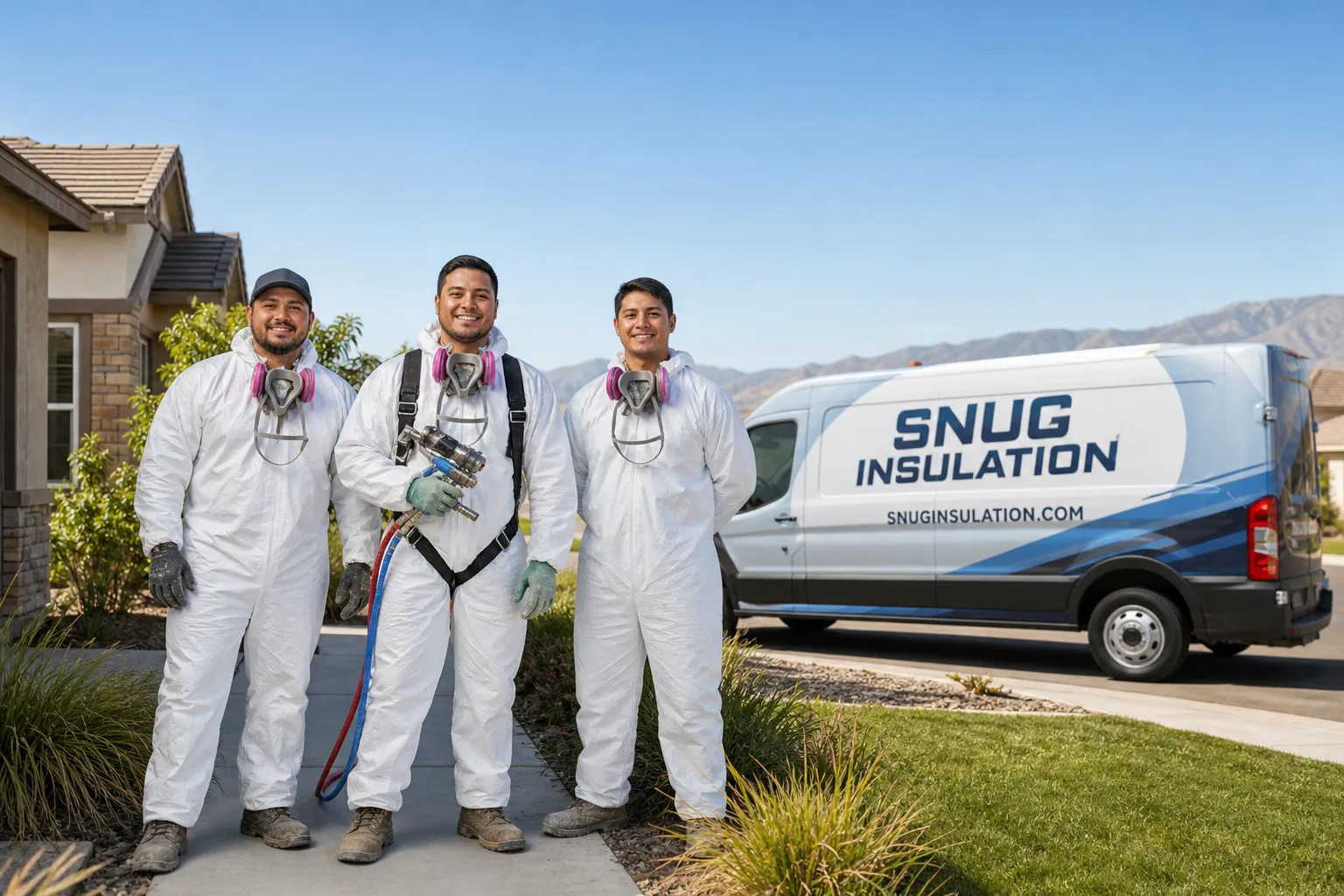
Noel Castaneda runs our crew, and he’s the one who will walk your attic with you, explain what’s failing and why, and give you a straight recommendation based on the conditions of your specific home, not a one-size answer. We stock Owens Corning, Johns Manville, and Rockwool materials for Rolling Hills Estates jobs, so when we recommend something, our trucks have it ready. That speeds up the work and means fewer return trips for you.
Attic Ventilation in Rolling Hills Estates
Attic Ventilation in Rolling Hills Estates is the first thing we evaluate on almost every call, because a closed-up attic here traps marine-layer moisture on the north side while cooking the south side. Without the right airflow, you get damp sheathing, mold staining on rafters, and degraded insulation that loses its loft and its R-value. Proper ventilation balances intake at the eaves with exhaust at or near the ridge, and on Peninsula homes, that often means adding baffles to keep blown-in material from blocking the soffit vents while keeping air moving through vaulted and multi-level cavities.
Marine-Layer Moisture and Stale Attic Air
On homes along Palos Verdes Drive North and the hillside streets above it, we regularly find condensation on north-facing rafters even when the attic looks dry everywhere else. That condensation wets batts, compresses them, and cuts their effective R-value by 30 percent or more. Fixing it starts with ventilation that dries the shady side, then insulation that won’t absorb and hold moisture against the sheathing.
One-Day Ventilation Upgrades
Most Rolling Hills Estates ventilation upgrades run $450 to $1,400 depending on how many baffles, vents, or exhaust points are needed. We usually combine the work with insulation replacement so we’re not pulling material out twice. A typical combined job, venting plus top-up or replacement, runs $2,200 to $5,800 across Rolling Hills Estates ZIP code 90505.
Radiant Barrier in Rolling Hills Estates
Radiant Barrier in Rolling Hills Estates matters because your roof deck doesn’t just get warm in the afternoon sun, it gets hot enough to radiate heat straight down through your ceiling insulation, which is exactly the wrong direction in August. Standard batts slow conducted heat but do almost nothing for radiant heat. A radiant barrier stapled to the underside of the roof deck reflects that heat back out, which can drop attic temperatures by 20 to 30 degrees on a sunny Peninsula afternoon and take a real load off your AC.
South- and West-Facing Roof Decks
On hillside custom builds, the south and west roof planes catch the worst of the afternoon sun, and that’s where we see batts baked brittle and falling apart. A radiant barrier on those planes, combined with air-sealed insulation below, stops the heat before it ever reaches your living space. We typically spec this on homes where upstairs rooms run 8 to 12 degrees warmer than downstairs by mid-afternoon.
When Radiant Barrier Makes More Sense Than More Batts
If your attic already has decent insulation depth but the rooms below still overheat, adding more batts won’t fix the problem because the heat isn’t conducting, it’s radiating. On Rolling Hills Estates homes, a radiant barrier job typically runs $1,200 to $3,400 depending on roof area and access. In many attics, it’s the difference between an upstairs that feels okay and one that’s actually comfortable on a July afternoon.
Trusted Brands We Service in Rolling Hills Estates
We work with Owens Corning, Johns Manville, and Rockwool because the performance differences between those products matter when we’re matching material to a specific Rolling Hills Estates attic. Owens Corning and Johns Manville give us dependable fiberglass batts and blown-in options for standard attic floors, while Rockwool’s mineral wool handles the moisture-tolerant, fire-rated side of the equation that fiberglass sometimes can’t on damp north-facing cavities. We keep materials for Rolling Hills Estates jobs stocked in our trucks, which means faster turnarounds and no waiting on special orders for most retrofit work. If you’re in ZIP code 90505, we can usually have your attic insulated within a few days of your estimate.
Common Attic Insulation Problems We See in Rolling Hills Estates Homes
- Damp, compressed batts on north-facing cavities. The marine layer parks on the shady side of the roof and condenses against the sheathing, wetting insulation until it loses its loft and stops working. Those batts look thicker than they are, but their effective R-value is a fraction of the label.
- Baked, brittle insulation on south and west roof planes. The same home often has the opposite problem on the sun-exposed slope. Years of afternoon heat degrade fiberglass until it crumbles, and radiant heat pours through the ceiling even where insulation depth looks fine.
- Air and moisture bypass in multi-level attics. Rolling Hills Estates custom builds tend to have vaulted ceilings and split-level attic cavities, and the transitions between those levels leak air. You get moist indoor air rising into the attic on one side while hot outside air pushes in on the other.
- Blocked or missing soffit vents. We see it on mid-century ranch homes throughout 90505: insulation pushed tight against the eaves, choking off intake air, so the attic can’t breathe at all. The trapped moisture then condenses on whatever surface is coolest, which is usually the north-facing sheathing.
Pricing for Attic Insulation in Rolling Hills Estates, CA
Here’s what you can expect to pay in Rolling Hills Estates right now. A blown-in top-up over existing insulation runs $900 to $2,200 for a typical 1,500-square-foot attic. Full removal and replacement runs $2,800 to $6,500 depending on whether we’re dealing with batt or blown-in, and whether the attic has tricky access or multi-level cavities. Radiant barrier installation adds $1,200 to $3,400 depending on roof area. Ventilation work, including baffles and exhaust vents, runs $450 to $1,400. The biggest cost factor on the Peninsula is access: hillside homes with steep driveways and tight attic hatches take longer to stage, and custom multi-level attics require more labor than a simple ranch tract home. Call (844) 241-0737 and we’ll give you an exact quote based on your attic, not a range off a website.
We Also Serve Cities Near Rolling Hills Estates
While this page focuses on Rolling Hills Estates, our crews also run Attic Insulation calls into Manhattan Beach, Torrance, Lomita, and Palos Verdes Estates, where many of the same marine-layer moisture and sun-exposure problems show up. Our Attic Insulation in Rolling Hills Estates team knows the Peninsula’s housing stock and schedules routes so your job doesn’t wait behind a drive across the county.
Serving Rolling Hills Estates, CA — Our Local Coverage Area
We’re based in the Rolling Hills Estates area and know this community well. Use the map below to see our service coverage — if you’re nearby, we can almost certainly help.
FAQs About Attic Insulation in Rolling Hills Estates
Yes. In Rolling Hills Estates, moisture control is usually the bigger half of the job. The marine layer condenses on north-facing sheathing, wets fiberglass, and invites mold on rafters if the attic can’t dry out. We spec ventilation and moisture-tolerant materials like Rockwool on the damp side, then address radiant heat on the sunny side separately. Call (844) 241-0737 and we’ll tell you which side of your attic is the priority.
Because more batts won’t stop radiant heat. When the sun bakes your south or west roof deck, that heat radiates down through the ceiling even if you have 18 inches of fiberglass up there. A radiant barrier reflects the heat before it enters the attic, and in Rolling Hills Estates that’s often the difference between an upstairs room that tops 85 degrees and one that stays comfortable in July.
In most cases, yes. We work from the attic side, sealing transitions between levels and using blown-in material that fills odd-shaped cavities without disturbing finished ceilings below. Vaulted sections sometimes need baffles and specialized venting to keep air moving without blocking airflow. We’ll assess your specific attic and tell you what’s possible before we quote anything.
We work with Owens Corning, Johns Manville, and Rockwool, plus GreenFiber for cellulose where a recycled-content option fits the job. The brand depends on the cavity: Rockwool for damp north-facing cavities where moisture tolerance matters, Owens Corning or Johns Manville for standard attic floors, and GreenFiber when you want a dense, air-sealing blow-in. We’ll show you the options and the cost difference.
The marine layer means your attic needs ventilation that keeps air moving year-round, not just in summer. Stagnant air on a foggy morning condenses on cool sheathing and never dries out if air can’t circulate. We add baffles at the eaves and often exhaust vents near the ridge specifically so damp air leaves the attic before it soaks your insulation. On the sunny side of the same roof, that same airflow carries away heat that would otherwise cook the batts. Get a free attic inspection by calling (844) 241-0737.
Talk to Noel About Your Rolling Hills Estates Attic
If your upstairs rooms feel damp in the morning and hot by late afternoon, you’re not imagining it, and adding random insulation won’t fix it. Noel Castaneda and the Snug Insulation crew will inspect your attic, show you exactly what’s happening on the north and south sides of your roof, and recommend the right combination of ventilation, radiant barrier, and insulation for your specific home. One visit, straight answers, no pressure. Call (844) 241-0737 for a free estimate today.
Written by Noel Castaneda, Owner at Snug Insulation, serving Rolling Hills Estates and the Palos Verdes Peninsula.