
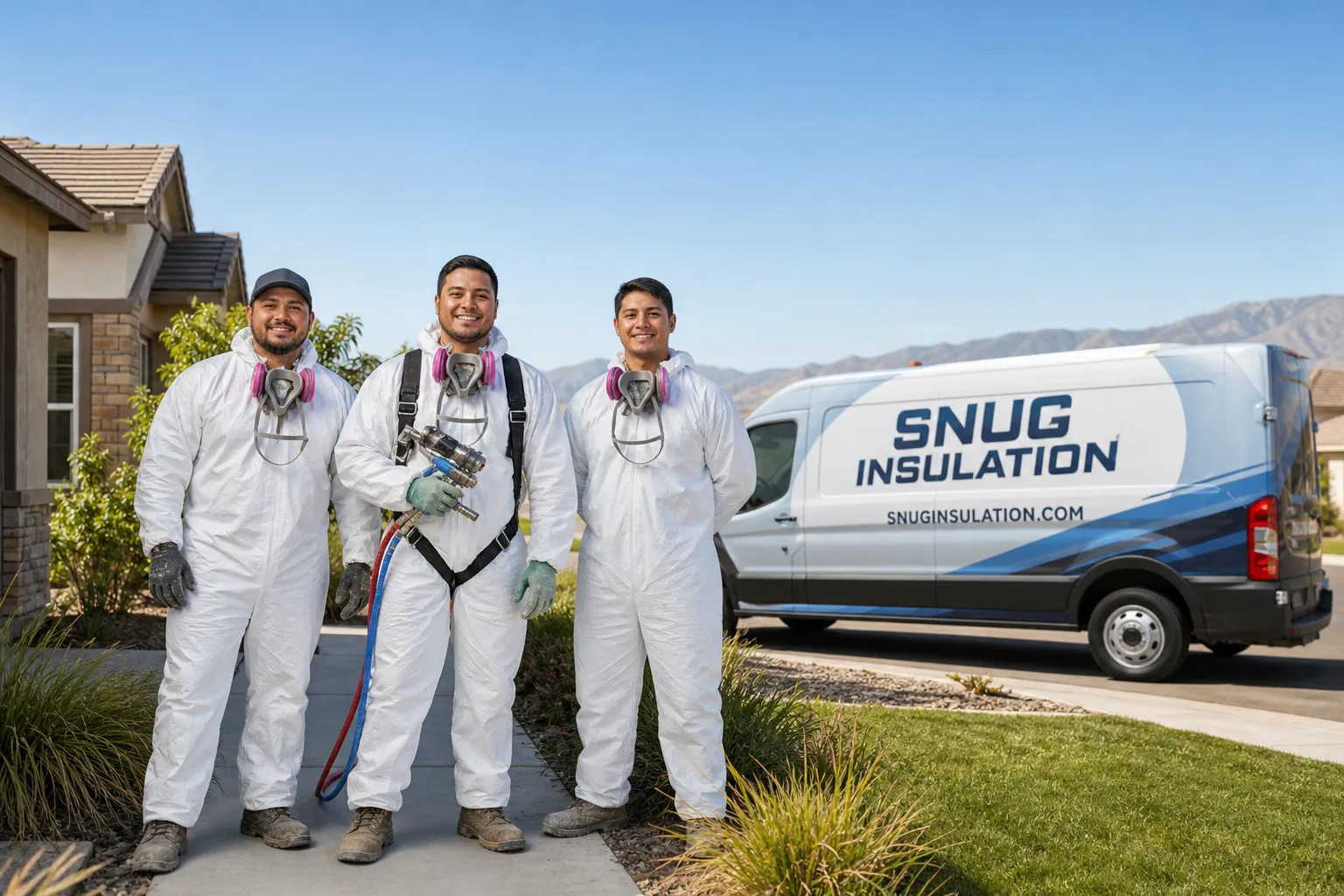
Fast, Reliable Attic Insulation Across Northridge
Attic insulation in Northridge isn’t a cosmetic upgrade. It’s the difference between a house that holds cool air in July and one that bleeds it through the ceiling by noon. We work in Northridge every week, from the ranch streets off Reseda Boulevard to the tract homes north of CSUN, and we know what sits inside these attics: 50-year-old batts, post-1994 earthquake framing patches, and dust you don’t want to breathe. Our crews reach most Northridge homes within the same day or next morning. Call (844) 241-0737 if you’re tired of rooms that never cool down.
Why Snug Insulation Is Northridge’s Preferred Attic Insulation Company
Northridge homeowners call us because we don’t treat insulation as a sideline. We’re a single-trade insulation specialist, run by Noel Castaneda, and every job we do in 91327, 91328, and 91330 is scoped by someone who has crawled through hundreds of San Fernando Valley attics. We know the 1950s ranch stock off Tampa Avenue, the 1960s tracts between Nordhoff and Lassen, and the common failure patterns in each. What separates us from a general contractor is that we don’t guess. We open the attic, map what’s there, and prescribe the right material: blown-in GreenFiber, fiberglass batts from Owens Corning, or Johns Manville rolls when the joist spacing is irregular. We service what we install, we stock common parts locally, and we don’t leave a Northridge job until the attic is air-sealed and properly vented. Homeowners who’ve used us tend to mention the same thing: the crew showed up on time, explained what they found, and didn’t turn a simple job into an upsell.
The Northridge Attic Problem Most Contractors Miss
Northridge is ground zero for the 1994 earthquake, and that history lives inside the attics. Thousands of mid-century ranch homes still have their original R-11 to R-13 fiberglass batts, installed when the houses were built and never touched during post-quake repairs. Why does that matter? Because when the 1994 earthquake damaged chimneys, cracked ceilings, and shifted framing, the repair crews prioritized structure, not insulation. They sistered joists, added seismic blocking, and patched drywall, then closed up the attic without addressing what the shaking had done to the insulation itself. The result is a decade-specific problem: sagging, compressed, dust-and-rodent-contaminated batts sitting in attics that no longer match their original framing. A simple top-up can’t fix that. The old material has to come out first, and the patched framing needs to be understood before new insulation goes in. This is why we scope Northridge jobs differently than we scope jobs in Van Nuys or North Hills. We assume the attic has surprises, and we plan for them.
Attic Ventilation in Northridge
Attic Ventilation in Northridge matters more than in most of Los Angeles County because summer attic temperatures here routinely cross 140°F. A poorly vented attic doesn’t just overheat the ceiling below; it cooks the insulation itself, degrading batt binders and shortening the lifespan of whatever material you paid to install. The fix in Northridge typically means ridge vents on the low-pitch roofs common to 1960s tracts, balanced with soffit intake vents that have often been painted over or blocked by years of accumulated dust. A proper ventilation job on a typical 1,200 to 1,600 square-foot Northridge ranch runs $600 to $1,400, depending on whether we’re adding ridge venting, clearing soffits, or installing baffles in every bay. We include ventilation assessment with every Attic Insulation job because insulation without airflow fails in the San Fernando Valley heat.
Ridge and Soffit Venting
Most Northridge ranch homes were built with gable vents or a single passive ridge outlet. That’s rarely enough. We install continuous ridge venting and reopen soffit intakes so air moves from the eaves to the peak, pulling heat out before it sits against the ceiling drywall.
Baffle Installation in Patched Framing
Post-quake framing often means added blocking in the outer bays, which chokes the air channel from soffit to attic. We install baffles around that blocking so the air path stays open even where 1990s repair crews added lumber.
Radiant Barrier in Northridge
Radiant Barrier in Northridge is a direct answer to the San Fernando Valley’s 140°F attic summers. A radiant barrier is a reflective foil, stapled to the underside of the roof rafters, that reflects radiant heat before it hits the insulation and ceiling below. In Northridge’s low-pitch ranch attics where headroom is tight and venting is marginal, a radiant barrier can drop attic temperatures by 20 to 30 degrees on the hottest afternoons. Installed cost for a typical Northridge attic runs $1,200 to $2,400, depending on roof size and rafter layout. We pair it with blown-in insulation rather than treating it as a standalone fix, because a radiant barrier without adequate insulation underneath still lets conductive heat through on cool nights.
Rafter-Mounted Foil for Tight Attics
Open, low-pitch attics are the norm in Northridge, especially in post-war tracts where roof pitches run 4:12 or flatter. Rafter-mounted foil fits these spaces where rigid board won’t, and it doesn’t interfere with the added seismic blocking that’s common here.
Combining Barrier with Blown-In Cellulose
We often specify radiant barrier over GreenFiber cellulose in Northridge. The cellulose fills voids around patched joists and added blocking, while the foil handles the radiant load from the roof deck. It’s a two-layer approach that matches how these attics are actually built.
Trusted Brands We Service in Northridge
We work with Owens Corning, Johns Manville, Knauf, and GreenFiber, and we stock common materials for Northridge jobs so a repair doesn’t wait on a parts truck from Moreno Valley. Most Northridge attics we service were originally insulated with Owens Corning or Johns Manville fiberglass, and we still install both where the framing is clean. For attics with patched joists and irregular bays, GreenFiber cellulose blown-in is our usual prescription because it fills around the added blocking that a batt can’t. Knauf rolls fit the wider joist spacing we see in a few 1970s custom builds north of Lassen. One shop, multiple brands, and no single-product bias.
Common Attic Insulation Problems We See in Northridge Homes
- Compressed original batts from the 1950s and 60s. R-11 batts installed 60 years ago have settled to the equivalent of R-5 or worse. We see this in nearly every untouched ranch attic in Northridge, especially where roof leaks and rodent activity have matted the fiberglass flat.
- Post-1994 seismic blocking creating dead zones. Added lumber from earthquake repairs interrupts batt runs and leaves uninsulated gaps at plate lines and corners. A batt thrown over the top bridges those gaps but leaves an air channel underneath.
- Dust- and rodent-contaminated insulation. 50 years of Santa Ana wind pushes fine dust through gable vents, and rodents nest in the old fiberglass. That contamination is a health issue when air leaks pull attic air into the living space.
- Overheated attic air degrading ceiling comfort. When the attic hits 140°F, the ceiling drywall becomes a radiant heater. Insulation alone won’t stop that; ventilation and often a radiant barrier are needed to keep the ceiling surface livable.
Pricing for Attic Insulation in Northridge, CA
We Also Serve Cities Near Northridge
From our primary base in Moreno Valley, we run dedicated crews into the San Fernando Valley every week. Northridge is a regular stop, but we also cover North Hills, Encino, Van Nuys, and Valley Glen with the same same-day response and full-scope insulation service. If you’re within 20 minutes of Northridge, we can likely reach you the day you call.
Serving Northridge, CA — Our Local Coverage Area
We’re based in the Northridge area and know this community well. Use the map below to see our service coverage — if you’re nearby, we can almost certainly help.
FAQs About Attic Insulation in Northridge
Because most Northridge attics still hold original R-11 to R-13 fiberglass that’s been compressed, contaminated, or disturbed by post-1994 earthquake framing repairs. Blowing new insulation on top of that buries the problem instead of fixing it. We recommend replacement when the existing material has settled below half its original depth, shows rodent or water damage, or sits in a patched attic where we can’t verify coverage. Call (844) 241-0737 and we’ll tell you honestly which side your attic falls on.
It adds two complications: framing that doesn’t match the original plans, and insulation that was never restored after structural repairs. We routinely find sistered joists, added blocking, and hidden second layers of old batts that change the scope mid-job. That’s why we quote after inspection, not over the phone, and why we build contingency into our Northridge estimates.
Yes, and it matters more, not less. A 140°F attic radiates heat through the ceiling drywall, forcing your AC to run longer. Proper insulation slows that heat transfer, and ventilation plus a radiant barrier can drop the attic temperature itself by 20 to 30 degrees. Northridge’s summer attic heat is exactly the reason insulation here should be treated as a performance upgrade, not a default.
Santa Ana winds push embers into attic vents, and the dry, windy fall is when Northridge is most vulnerable. The ember threat isn’t about the insulation material; it’s about the air path through the attic. Proper vent screening, a tight air-seal at the ceiling plane, and insulation that doesn’t leave gaps at plate lines all reduce the chance an ember finds fuel or airflow. We address that as part of every Northridge job.
Yes, because we plan for the surprises. We carry extra sealing materials, baffles, and multiple insulation types on every Northridge truck, and our crews have seen the post-quake framing patterns enough times that a sistered joist or added blocking doesn’t stop the job. We map the attic before we start, adjust the scope in real time, and we don’t need a return visit. Call (844) 241-0737 for a free estimate, and we’ll get your Northridge attic done right the first time.
Written by Noel Castaneda, Owner at Snug Insulation, serving Northridge and the San Fernando Valley.