
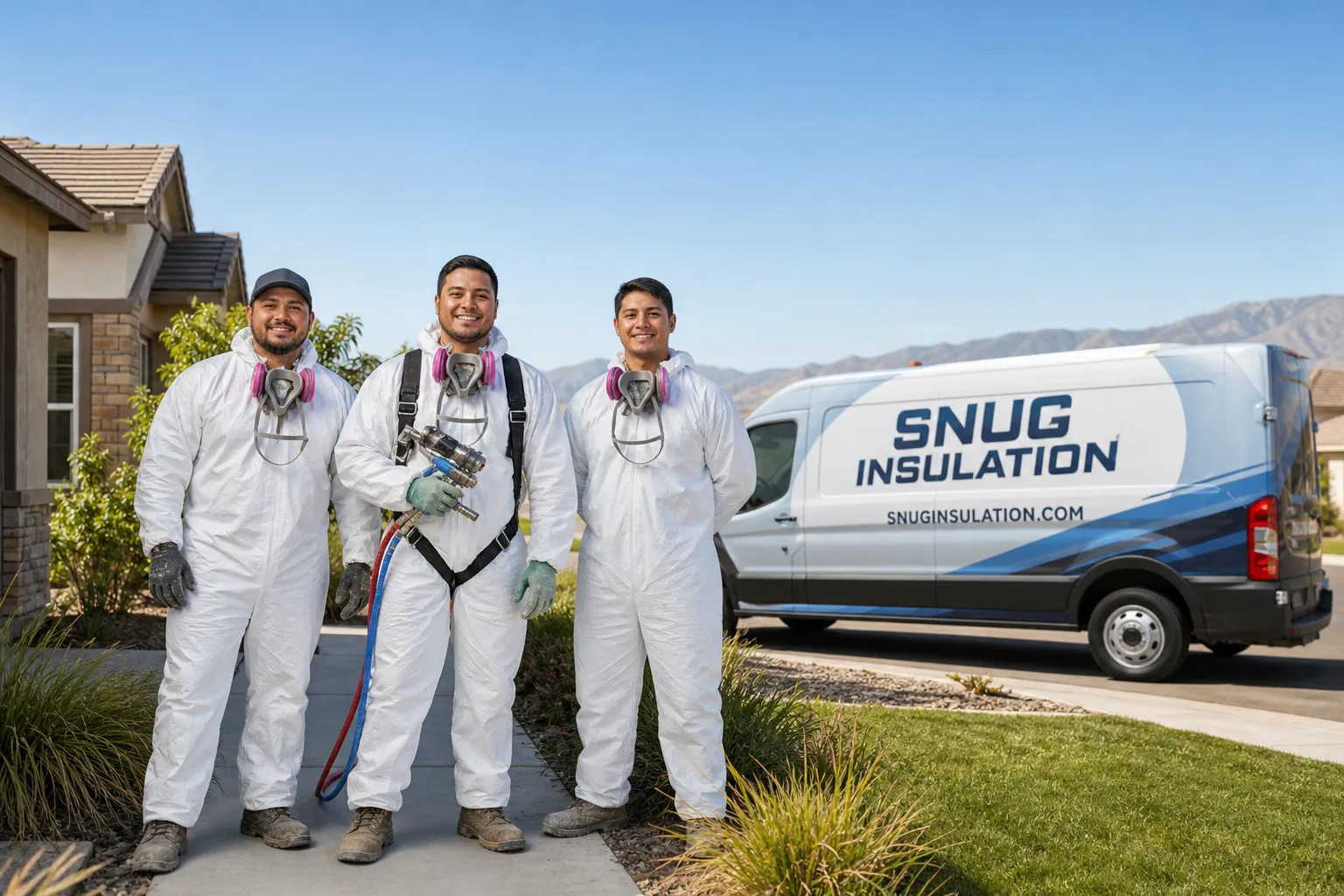
Fast, Reliable Attic Insulation Across Downey
Attic insulation in Downey typically runs $1.25 – $3.50 per square foot for blown-in work on a standard postwar ranch, and crews can usually be on-site within one to two days once you’ve approved the scope. Most Downey homes were built between 1940 and 1965 with almost nothing above the ceiling, which means we’re rarely doing a simple top-off. We’re retrofitting occupied, lived-in homes across 90239, 90240, 90241, and 90242, and we plan every job around the specific quirks of Downey’s housing stock. Call (844) 241-0737 and we’ll walk the attic with you before we quote a thing.
Key Takeaways:
- Downey attics are almost all retrofit jobs on post-1940s stucco and ranch homes, not new builds.
- Cooling-season performance drives insulation ROI in Downey’s hot inland basin, so radiant barrier and ventilation matter as much as R-value.
- We match the material to the attic: GreenFiber cellulose, fiberglass, Rockwool, or spray foam, depending on what the roof structure allows.
- Free estimates and honest line-item pricing. We quote the attic we’re actually looking at, not an industry average.
Why Downey Homeowners Call Snug Insulation
Our Attic Insulation work in Downey is focused on one thing: un-doing the energy waste that came standard with the city’s postwar building boom. The 1940s and 1950s stucco tracts off Paramount Boulevard, Firestone Boulevard, and the older east-side streets near Rio Hondo were framed fast and insulated almost never. We know exactly what those attics look like before we open the hatch, and that saves you time and guesswork.
Noel Castaneda, who leads Snug Insulation, has built a reputation around matching the insulation to the structure rather than forcing the same material into every home. On a Downey pier-and-beam ranch, that might mean GreenFiber blown-in cellulose for the attic plus Rockwool in a vaulted ceiling cavity. On a flat-roof tract house near Stonewood Center, it might mean shifting the venting plan before adding any material at all. That kind of call comes from doing only insulation work, every day.
We don’t treat Downey as a drive-by stop. Our technicians know the permit expectations in LA County, the access problems that come with stucco exteriors, and the attic realities of low-pitch roofs. You’ll see that familiarity the first time we talk about your ceiling.
Attic Ventilation in Downey
Attic ventilation in Downey is not optional, not on homes where a low-slope or flat roof leaves minimal air space and the summer sun pushes attic temperatures well past 130°F. Ventilation is the system of intake and exhaust that moves hot air out of the attic so your insulation isn’t just holding heat against the ceiling. It matters year-round here, but especially from May through October, when a poorly vented attic can keep your cooling system running long after the sun drops.
On a typical Downey attic ventilation job, we’re assessing whether the existing vent path is actually moving air or just reading “present” on a home inspection report. The older east-side tracts in particular have soffit intakes that were painted over, roof vents that don’t line up with the low-slope design, or no intake path at all. The sequence matters: venting first, then insulation. Adding R-value to a sealed, hot attic in Downey traps heat and raises the ceiling surface temperature. A ventilation-first correction in Downey runs roughly $450 – $1,200 depending on roof type and the number of vents being reworked.
Repairing a Sealed or Undersized Vent Path
A surprising share of Downey homes have soffit vents that were stuccoed or painted shut during a past exterior refresh. That kills the intake side of the system. We open or add intake ventilation before touching the attic floor insulation, because without that airflow, blown-in material sits against a soffit and blocks the path entirely. On flat-roof sections, we typically add or reposition static exhaust so the hot air has somewhere to go that matches the roof’s actual geometry.
Prepping Ventilation Before a Blow-In Top-Up
When a Downey homeowner calls us for “just a top-up,” we check the vent path before we add a bag of anything. Blowing new material into an attic with blocked soffits turns the project into a hotter attic, not a more efficient one. Vent prep can be as simple as installing baffles at the eaves or as involved as adding a second exhaust point near the peak. It’s the step that separates a real insulation contractor from someone running a hose.
Radiant Barrier in Downey
Radiant barrier in Downey makes sense for nearly every attic we enter, because this city’s insulation problem is driven by sun load first and air temperature second. A radiant barrier is a Reflectix repair in Downey approach using reflective material installed on the underside of the roof deck that bounces radiant heat back out before it ever reaches your attic floor insulation. In a hot-basin city like Downey, where cooling dominates the energy bill, skipping this step means insulating the ceiling more but still feeling heat radiate through it during the hottest stretch of the day.
A radiant barrier job in Downey generally runs $0.75 – $1.75 per square foot, and it’s usually done in the same visit as the attic blow-in. Combined with proper ventilation, it’s the highest-impact upgrade for reducing upstairs heat gain in a postwar stucco home.
Pairing Radiant Barrier With Attic Blow-In
We recommend pairing the two whenever the Downey home has a low-slope roof and a ceiling that radiates heat into the living space by mid-afternoon. Insulation slows heat transfer, but it doesn’t stop radiant energy from the roof deck from overwhelming the attic air. The barrier does that. On a small 1,000-square-foot ranch, a combined ventilation, radiant barrier, and blow-in retrofit is the most complete answer to a hot, under-insulated attic.
Radiant Barrier for Flat and Low-Slope Roofs
Downey’s flat-roof sections are actually some of the best candidates for radiant barrier, because the roof deck sits close to the ceiling and there’s no tall vented attic to buffer the sun. We install the barrier on the underside of the roof sheathing where the structure allows access. Combined with a repositioned static exhaust, the result is a meaningful drop in ceiling surface temperature on even the hottest Downey afternoons.
Trusted Brands We Service in Downey
Snug Insulation works with a specific set of manufacturers because they make predictable, high-performance materials. On most Downey retrofits we’re reaching for Attic Insulation products from Johns Manville, Knauf, and CertainTeed fiberglass, GreenFiber cellulose for odd-shaped or hard-to-reach attics, and Rockwool where fire resistance and noise control matter to the homeowner. Having a broad brand bench matters in Downey. A low-clearance attic on the east side and a typical pitched tract home on the west side are not the same job, and we don’t want to stuff one brand’s product where another one fits better.
Common Attic Insulation Problems We See in Downey Homes
- Postwar attics that were never fully insulated. Many 1940s and 1950s Downey homes still have a thin layer of original material, often R-11 or less, with bare spots above the bedrooms. This is the single most common condition we walk into.
- Blow-in jobs that skipped the vent check. We regularly see newer insulation trapping heat under low-slope roofs because no one addressed the soffit intake before filling the attic. The ceiling gets hotter, and the homeowner assumes insulation doesn’t work.
- Interior wall cavities left uninsulated. Downey’s stucco exteriors make wall retrofit work less appealing to general contractors, so walls stay empty. Dense-packing from the interior, then patching, is often the only path.
- Flat-roof sections with no vent path at all. The flat or ultra-low-slope roof sections on east-side Downey homes can’t vent the way a tall pitched attic does. Insulating those without a specific plan holds heat right at the ceiling.
Pricing for Attic Insulation in Downey, CA
A standard blown-in attic top-up in Downey runs $1,800 – $3,400 for a typical 1,100 – 1,500-square-foot home. Full removal and replacement runs $2,800 – $5,200 depending on attic condition, access, and whether we’re addressing ventilation or radiant barrier in the same visit. Radiant barrier adds $0.75 – $1.75 per square foot. Ventilation corrections run $450 – $1,200. Each quote is line-itemed and based on a physical attic inspection, not a square-footage formula pulled from a spreadsheet. The price you’re quoted includes the attic as it actually is in Downey: sometimes clear, sometimes tight, sometimes stucco-walled and low-sloped. We’ll show you the numbers before we bring a hose inside. Call (844) 241-0737 for a free at-home estimate.
We Also Serve Cities Near Downey
Our crews run insulation jobs through Downey and the surrounding southeast LA County cities every week. If you’re in Bell Gardens, Santa Fe Springs, Paramount, or Pico Rivera, you’ll get the same response time and the same material-matching approach. Attic Insulation in Downey is our most requested page in this area, but the same team covers these nearby communities with no extra mileage charge for the standard service area.
Serving Downey, CA — Our Local Coverage Area
We’re based in the Downey area and know this community well. Use the map below to see our service coverage — if you’re nearby, we can almost certainly help.
FAQs About Attic Insulation in Downey
Because most homes built in Downey in the 1940s and 1950s were framed with little or no attic insulation as original construction, and code enforcement in that era didn’t require it. On a 1950s ranch off the older east-side tracts, our crew found the original attic essentially bare: no more than a thin dusting of old material, with a low-slope roof that left almost no room to move. We ran GreenFiber blow-in to bring the attic up to a modern R-value and set up ventilation to move heat out. The homeowner noticed the difference in upstairs comfort the same week. If your home has never been touched since construction, this is likely your situation too. Call (844) 241-0737 for an inspection and a plan that fits your roof type.
Yes. Attic insulation itself doesn’t require touching walls at all. In Downey, the wall-cavity problem comes up only when we’re doing a combined wall-and-attic retrofit, and for most homeowners the attic alone is the highest-ROI first step. When wall work is needed on a stucco exterior home, we handle it from the interior side, drilling through plaster and patching afterward, rather than punching holes through your exterior finish. Attic blow-in is non-invasive: we work from the attic hatch and leave the living space in place.
Yes, they do, and that’s one of the things that separates Downey from newer nearby cities. Flat and low-slope roofs leave less attic air space, which means adding insulation without adjusting the vent path can trap heat against the ceiling. The older east-side tracts in particular have roof geometry that forces us to sequence the job: ventilation first, then insulation. We plan for that from day one, and we don’t blow material into a low-clearance attic without a plan for moving the heat out.
In most Downey homes, yes, and the reason is the sun load this city carries through the cooling season. Radiant barrier works on a different principle than insulation: it reflects heat at the roof deck before it can soak into the attic. On a flat-roof section or a low-slope roof, that matters more than on a tall pitched attic. If your ceiling feels hot to the touch in the afternoon, a barrier is the most direct fix. Combined with a blow-in upgrade, it’s the most complete single-visit improvement we offer here.
By checking and correcting the ventilation path before any new material goes in. In Downey, the most common failure is a soffit intake that’s been painted or stuccoed shut, or an exhaust path that doesn’t match the roof’s actual shape. We don’t blow new insulation into a sealed attic, because that would raise the ceiling surface temperature and make the house feel warmer, not cooler. The right sequence is vent, then insulate, and we’ll show you what’s there before we do either.
Contact Snug Insulation for Your Downey Attic Job
If you’re tired of a hot upstairs and energy bills that climb every July in Downey, let’s fix the thing that’s actually wrong. We’ll inspect your attic, check the vent path, and quote the right material for the roof you have, not the one a catalog assumes. Call (844) 241-0737 today for a free estimate in Downey, and you’ll get a straight answer from a specialist who has worked these postwar attics before.
Written by Noel Castaneda, Owner at Snug Insulation, serving Downey and southeast LA County.