
Insulation Company in Lakeland Village, CA
Blown in insulation is the most common retrofit we install in Lakeland Village, because most of the homes here were built between the 1950s and 1970s with little more than a thin layer of fiberglass in the attic, and sometimes not even that. The lake basin’s summer heat and the Santa Ana winds that rake the west shore through fall make an under-insulated home uncomfortable year-round, not just in August. Call us at (844) 241-0737 to talk through what your specific home needs.
Why Lakeland Village Homes Are Different
Lakeland Village is not a typical tract suburb. It’s an unincorporated lakefront community on the west shore of Lake Elsinore, built up primarily as small vacation cabins and modest ranch homes in the middle decades of the last century. Many of those cabins were never meant to be lived in through a full summer or a windy winter, so the wall cavities and attic spaces were left thin or empty. We open up walls and find single-wall construction, shallow attic pitches, and lake-facing knee walls with nothing behind them but siding and hope.
The climate punishes that construction. Summer temperatures in the Lake Elsinore basin regularly exceed 100°F, and the Santa Ana wind corridor funnels straight through the lake pass, pressing against the west shore. That means a home in Lakeland Village doesn’t just have a hot attic problem. It has a wind-driven air infiltration problem. We see dust and drafts moving through wall plates and electrical outlets on windy days, which is something you don’t get to the same degree in the flatter inland neighborhoods. The insulation plan has to account for both loads, not just one.
Because the housing stock is older and owner-improved rather than uniform, there’s no single blueprint that applies. Each job changes once we see what’s inside the walls and the attic. That’s the real work in Lakeland Village: matching the right material and the right install method to a house that was never built for modern energy codes in the first place.
Our Main Lakeland Village Services
Two jobs dominate what homeowners call us about in Lakeland Village. Both are listed here with their own dedicated pages, because the local conditions genuinely change how we approach them.
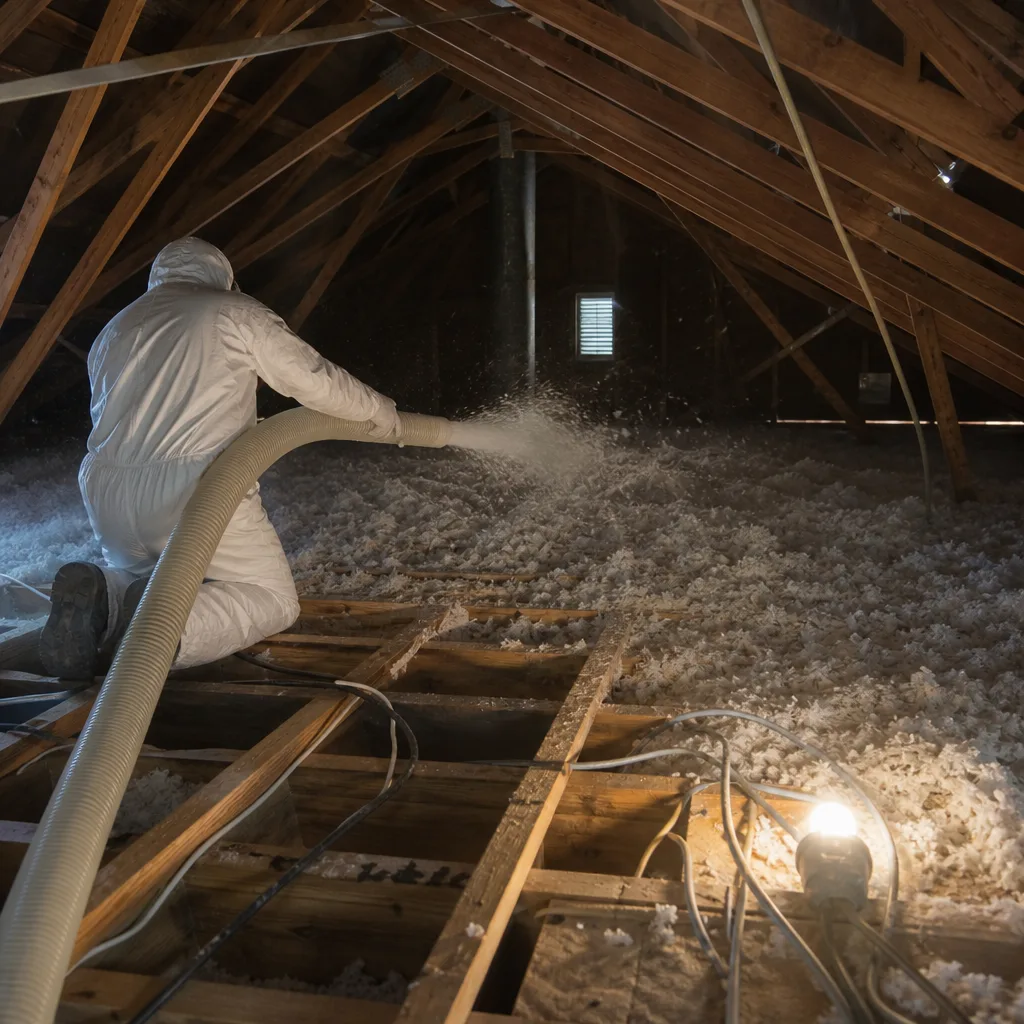
Attic Insulation in Lakeland Village
Most Lakeland Village attics are shallow, tight, and under-ventilated, which makes the material choice matter more than it would in a newer home. We assess the rafter depth, the existing ventilation, and whether the lake-facing wind is getting into the attic floor before we recommend a specific product. Read our full breakdown at Attic Insulation in Lakeland Village.
Spray Foam Insulation in Lakeland Village
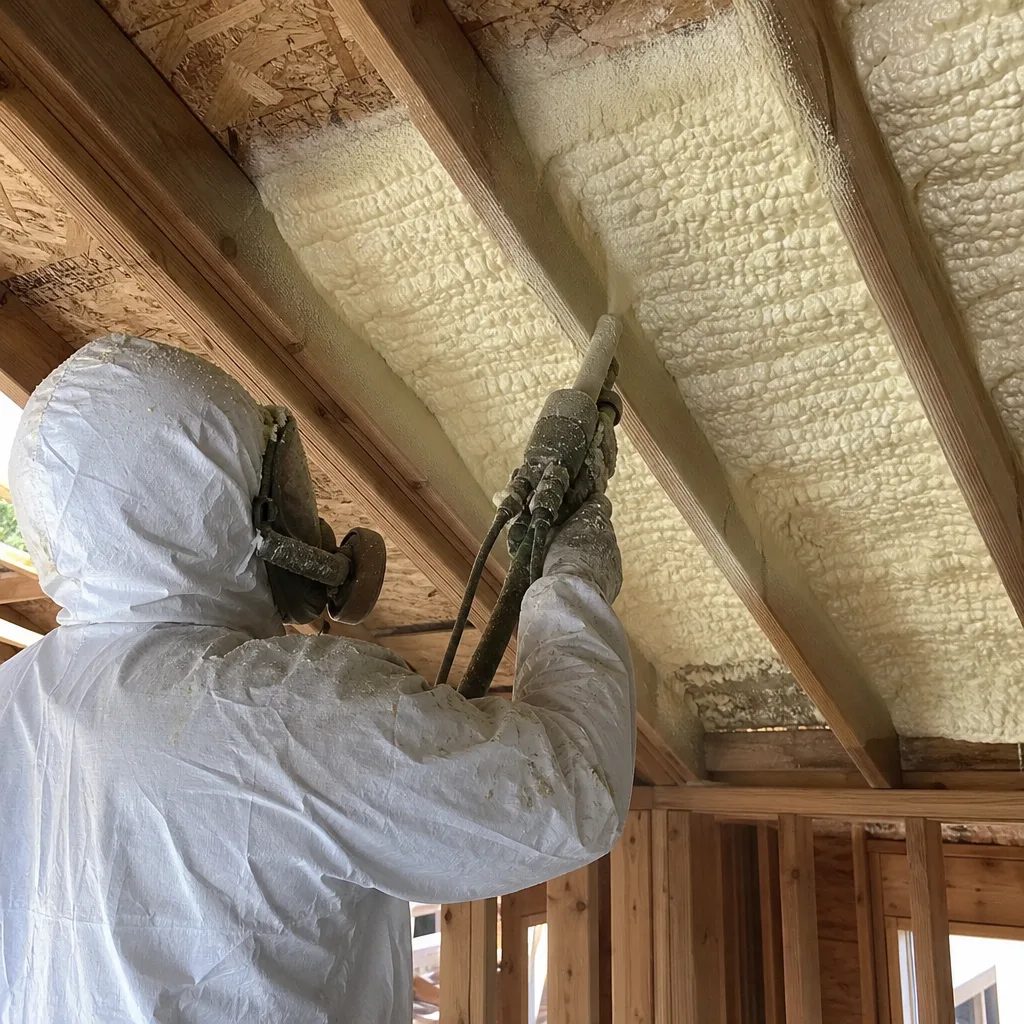
For west-shore cabins with open wall cavities or knee walls that leak air on windy days, spray foam often makes the most sense because it air-seals as it insulates. It’s not always the right answer, but when the Santa Anas are pulling dust and drafts through the wall plates, it solves problems batt or blown-in materials can’t touch. See the specifics at Spray Foam Insulation in Lakeland Village.
What happens when you call
- 1
A real person answersNo phone trees — you reach a local pro.
- 2
You get an upfront price rangeHonest numbers before anyone is dispatched.
- 3
A background-checked tech heads outLicensed & insured, dispatched right away.
- 4
You approve before work beginsNothing starts until you say go.
Blown In Insulation in Lakeland Village
Blown in insulation is the workhorse retrofit for Lakeland Village’s older homes, because it’s the fastest way to get serious R-value into shallow, awkward attic spaces without tearing out ceilings or rebuilding walls. In a 1950s lakeside cabin with irregular rafter spacing and a low pitch, blowing material into the cavities gets coverage that batts simply cannot. Most of the homes we see in the 92530 ZIP code have attics that are under-insulated by at least half of what current standards call for. For a broader look at the service itself, see Blown In Insulation.
Cellulose Insulation
Signs you need it
If your ceilings radiate heat in the summer, your heating runs constantly on cold nights, and the attic floor has settled old insulation with visible gaps, cellulose is a strong candidate.
What it costs in Lakeland Village
Blown-in cellulose in a typical Lakeland Village attic runs roughly $1,800 to $3,200, depending on square footage and how much old material needs removing first.
How we do it
We air-seal the attic floor penetrations, then blow GreenFiber cellulose to the target depth, making sure the lake-facing wall plates are covered even in tight spots.
Blown In Attic Insulation
Signs you need it
You’ll notice rooms that never hold temperature, attic access hatches that feel hot to the touch, and drafts that appear in the house when the wind picks up off the lake.
What it costs in Lakeland Village
Most blown-in attic jobs on the west shore run between $2,000 and $3,800, with shallow attics and steep roof pitches adding labor time.
How we do it
We confirm the attic’s ventilation is working, seal the bypasses where wind enters from the lake side, and blow insulation to a consistent depth across the full attic floor.
What Blown In Insulation Costs in Lakeland Village
| Item | Typical range in Lakeland Village |
|---|---|
| Blown-in attic insulation (small attic, under 1,000 sq ft) | $1,600 – $2,400 |
| Blown-in attic insulation (larger or steep-pitch attic) | $2,800 – $4,000 |
| Cellulose or fiberglass blow-in after air sealing | $2,200 – $3,800 |
Can blown-in insulation stop the drafts I feel when the Santa Anas blow?
It helps substantially, because dense blown coverage blocks air movement through the attic floor. We pair it with air sealing at every penetration, which addresses the actual wind path from the lake side before the insulation goes in.
Is blown-in insulation right for a shallow 1950s attic?
Usually, yes. Blown material fills irregular cavities and low-clearance edges far better than batts. We’ll confirm vent baffles are in place first so the shallow roof deck still breathes, then blow to the depth the framing allows.
Brands We Service in Lakeland Village
We work with Knauf and CertainTeed fiberglass, Rockwool mineral wool, and Icynene spray foam, and we stock the common sizes and densities needed for Lakeland Village’s older, non-uniform homes. If a lakefront cabin needs a Rockwool knee-wall detail and a Knauf attic blow, we have both on hand in the same week. Take a look at our brands for the full picture.
Pricing for Insulation Company in Lakeland Village, CA
| Service | Typical range in Lakeland Village |
|---|---|
| Blown-in attic insulation | $1,600 – $4,000 |
| Blown-in cellulose | $1,800 – $3,200 |
| Blown-in fiberglass | $1,700 – $3,400 |
| Loose fill insulation | $1,600 – $3,600 |
| Attic insulation retrofit | $2,000 – $4,500 |
| Spray foam knee-wall or rim-joist work | $1,800 – $4,200 |
| Full spray foam attic (closed-cell) | $5,500 – $9,000 |
| Rockwool batt installation | $1,900 – $4,800 |
| Air sealing plus blow-in | $2,200 – $4,400 |
In Lakeland Village, the two things that push a price toward the higher end are shallow or steep attic access and the need to remove old, compressed insulation that’s blocking the target depth. We give a fixed, line-item price before any material goes in, and that price is what you pay: no allowances, no surprise add-ons on install day.
Neighborhoods We Serve in Lakeland Village
We work throughout the 92530 ZIP code and the west shore of Lake Elsinore, from the lakefront streets up to the hillside lots off Grand Avenue. Many of these neighborhoods share the same older construction and wind exposure, but each block has its own quirks depending on how the homes were improved over the years. Typical response time for a Lakeland Village estimate is within two to three business days.
- Lakeshore Drive corridor
- Grand Avenue hillside
- West shore lakefront
- Riverside Drive area
- Offhill Street neighborhood
Service Area – Cities Near Lakeland Village
We also cover the communities directly around the lake basin and along the pass. If you’re in Sedco Hills, CA, Canyon Lake, CA, Meadowbrook, CA, or Wildomar, CA, we can schedule a time to look at your home the same way we do for Lakeland Village.
Serving Lakeland Village, CA — Our Local Coverage Area
We’re based in the Lakeland Village area and know this community well. Use the map below to see our service coverage — if you’re nearby, we can almost certainly help.
FAQs About Insulation Company in Lakeland Village
We typically schedule estimates in Lakeland Village within two to three business days, and we can often work the measurement visit around your schedule if you’re only at the lake house on weekends. Call us at (844) 241-0737 and we’ll find a slot that works.
Because Lakeland Village is unincorporated Riverside County, most insulation retrofits don’t require a permit, but if your project includes structural changes like a knee-wall rebuild or venting modifications, the county may ask for one. We’ll tell you before the job starts whether anything needs filing.
Yes, and it’s common here. Many Lakeland Village homes are seasonal or weekend places, so we schedule estimate visits and installs around when someone will be on site, and we’ll keep you updated by phone throughout the job.
If your Lakeland Village home runs hot in July or you feel the Santa Anas inside the house in November, call us at (844) 241-0737 for a free estimate. We’ll look at the actual construction, not a clipboard template, and tell you what the walls and attic actually need.
What happens when you call
- 1A real person answersNo phone trees — talk to a local insulation pro.
- 2You get an upfront price rangeHonest numbers before anyone is dispatched. No surprises.
- 3A background-checked tech heads outLicensed & insured, typically same-day.
- 4You approve before work beginsNothing starts until you say go.
What Lakeland Village Customers Say
"Handled the utility rebate paperwork, which knocked a real amount off the final cost."
— Adriana Vargas"Installed baffles at the soffits so the new insulation didn't block the ventilation, which the previous contractor apparently never considered."
— Gilbert Hernandez"Found and sealed a gap around the chimney chase that was basically an open chimney to the attic."
— Paige Ziegler